

Blame it on the mailman: Nietzsche and the Vossianus Graecus 18
Did you know Friedrich Nietzsche is among the past users of Leiden University Library? Two letters from the famous philosopher give a fascinating glimpse of his early activities as a budding philologist. They also tell us a surprising story of ‘interlibrary loan’ in the nineteenth century.
In the final days of 1868, a 24 year old Friedrich Nietzsche wrote a letter to Leiden library's director Willem Pluygers. At this time, Nietzsche had not yet turned his mind to philosophy. He was an ambitious and very promising student of Greek philology, striving to secure a career in this field.
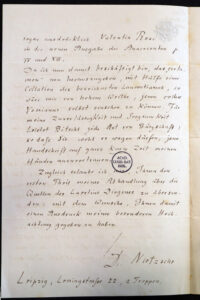
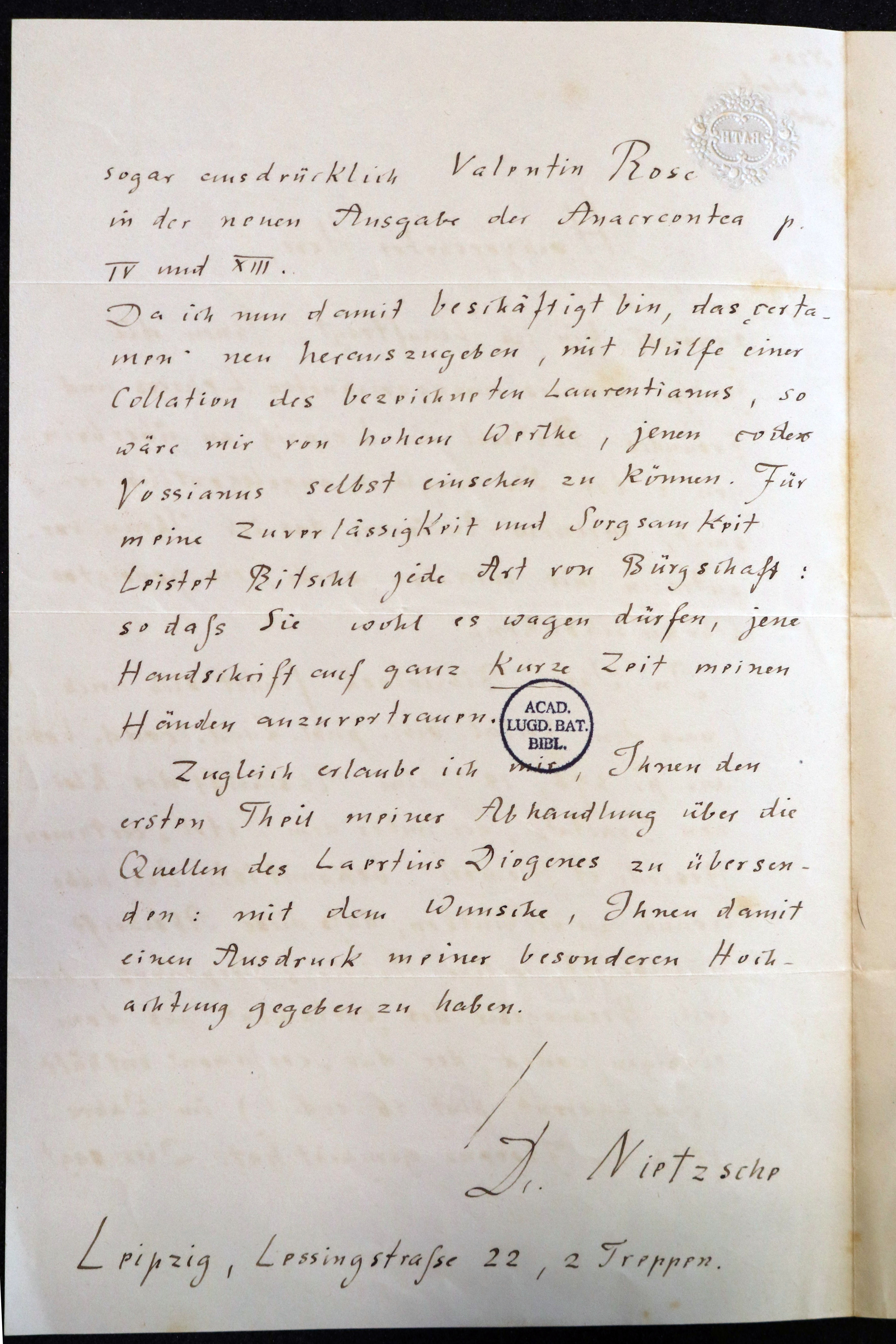
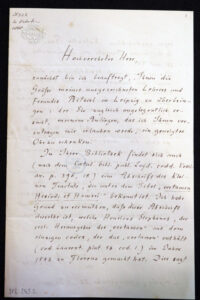
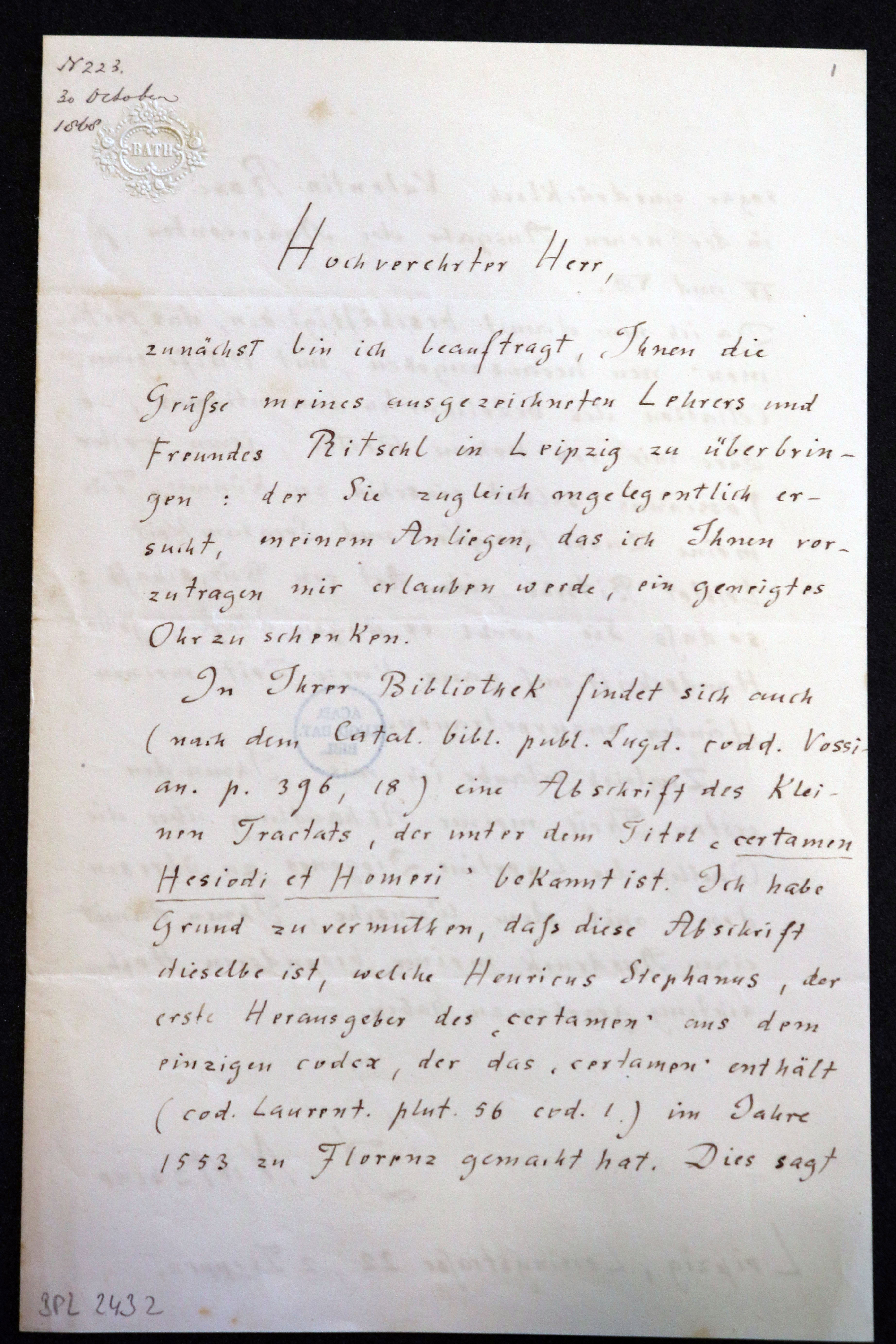
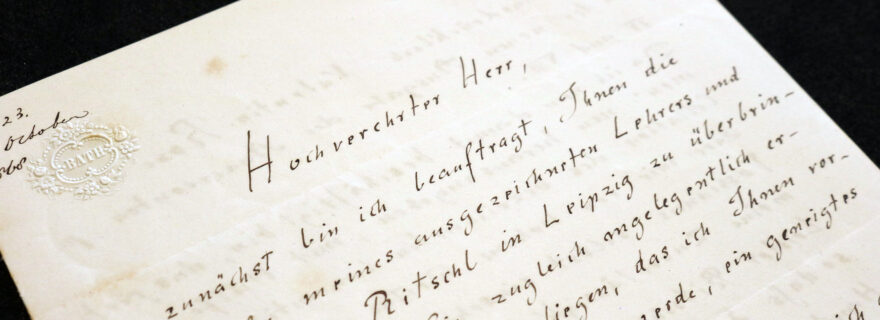
In his letter, Nietzsche asks Pluygers to be sent the 16th century codex Vossianus VGQ 18. This manuscript contains the Greek text of the Certamen Homeri et Hesiodi, a brief but intriguing double biography of Homer and Hesiod with at its heart an account of a literary contest between these two champions of Greek epic poetry. As Nietzsche is looking to publish a critical edition of the text, ‘it would be of great value to be able to consult the Vossianus. Ritschl can pledge in every way for my trustworthiness and carefulness’. The letter is confidently signed ‘Dr. Nietzsche’: although still a student, Nietzsche had somewhat prematurely adopted this title as he felt it reflected his level of competence.
Friedrich Ritschl held the chair in classical philology in Leipzig, and Nietzsche had joined him there a few years earlier. From Leipzig, he had been able to identify the exact manuscript he needed by consulting the 1716 printed catalogue by Van der Aa. In a pre-digital era, this monumental catalogue allowed scholars from all over Europe to inform themselves about Leiden Library’s already venerable collections.
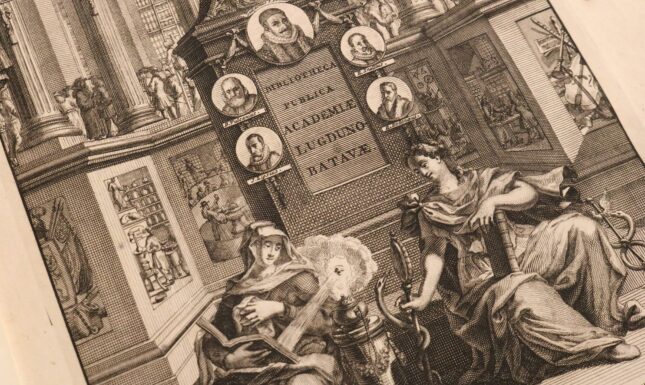
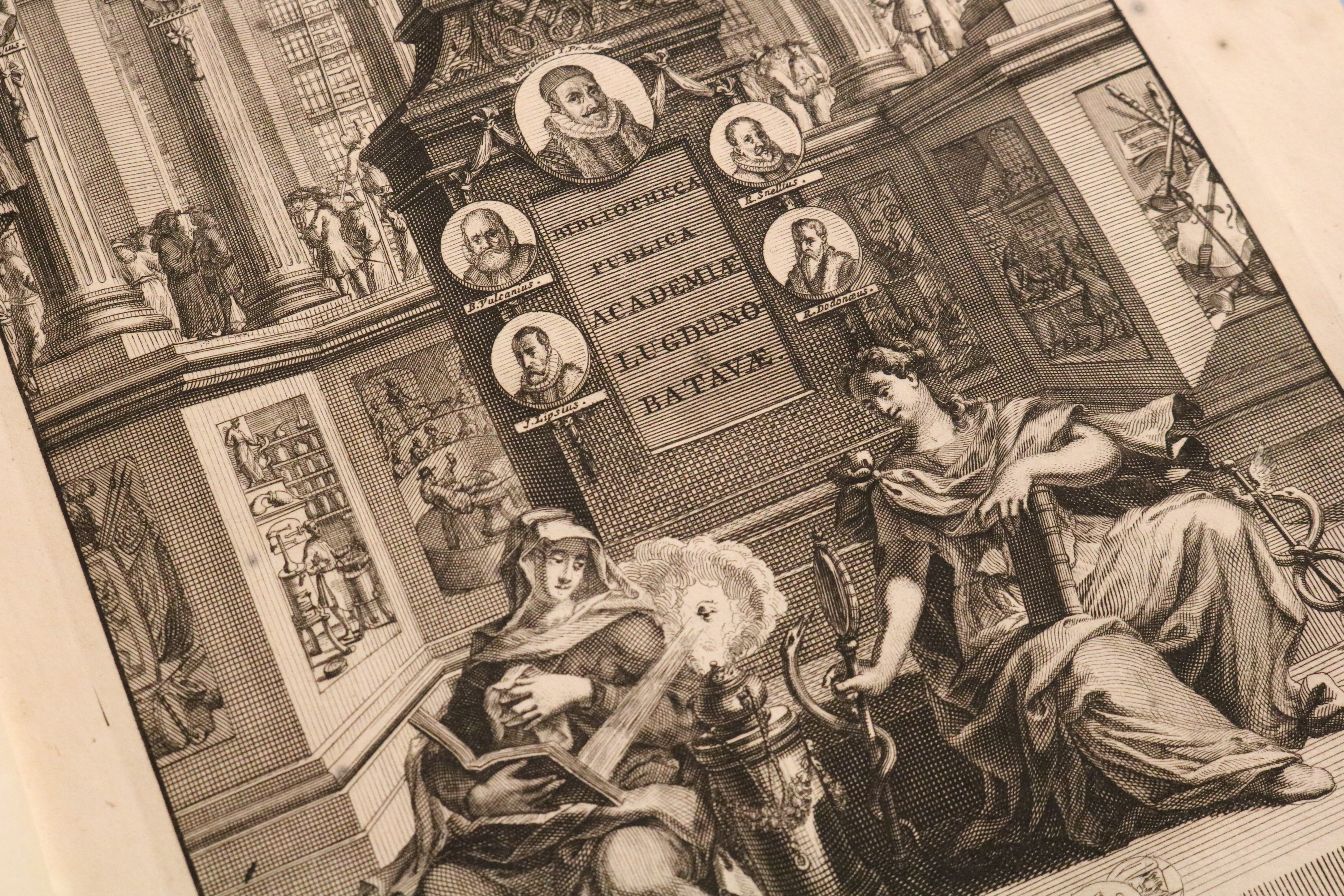
Astonishingly, the precious codex was indeed promptly dispatched to Germany. More astonishingly, this was by no means an exception. In the 19th century, the library regularly sent its rarest manuscript treasures to scholars all over Europe, often using the services of Van Gend en Loos, a direct predecessor of DHL. Leiden’s freshly appointed first curator of manuscripts Willem Nicolaas du Rieu seems to have sent the Vossianus to ‘Herr Oberbibliothekar Gersdorf’, his colleague in the Bibliotheca Albertina in Leipzig, with the stipulation the manuscript be returned within a month, so early December.
December came and went. Even mid-January, there was no sign of the manuscript in Leiden. To make things worse, two letters from Pluygers to Nietzsche came back unopened.
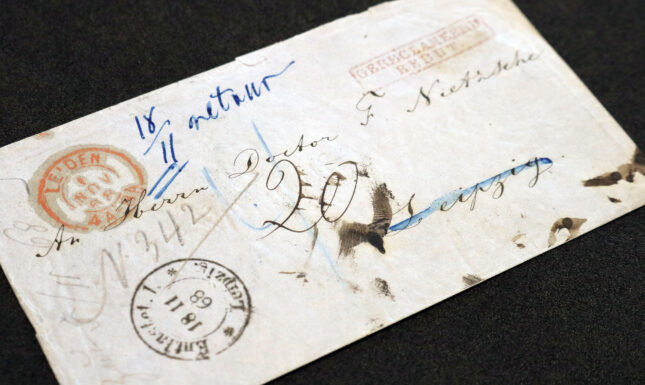
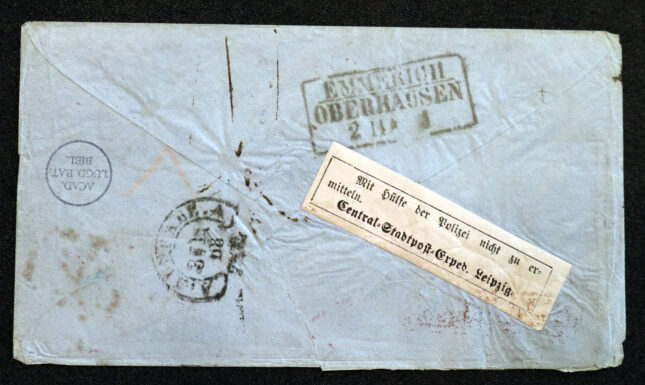
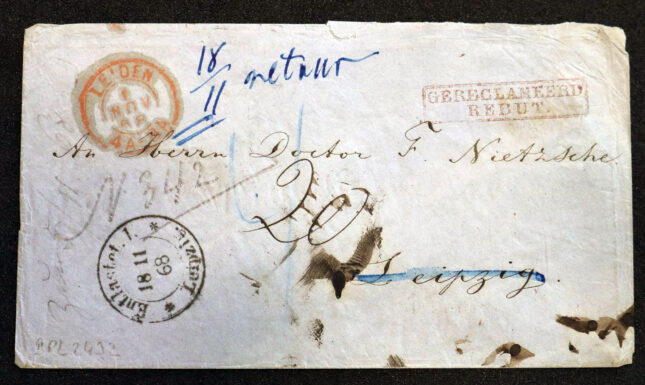
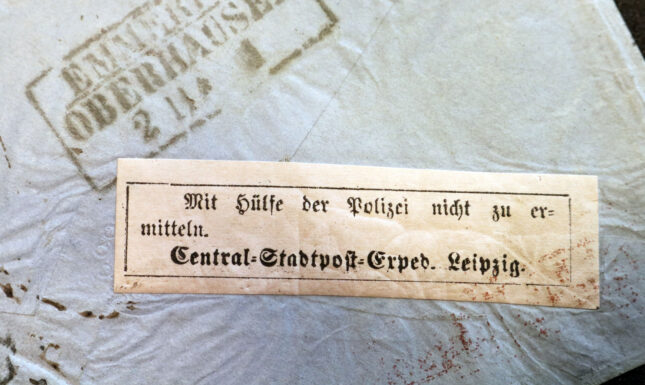
One of the envelopes, bearing no other address than ‘Herr doctor F. Nietzsche in Leipzig’, illustrates the twists and turns of postal journeys. Its many stamps and markings indicate that the letter left Leiden on 1 November, and reached Leipzig two days later. There, the mailman and even the local police looked for Nietzsche’s residence in vain, and the letter was returned to the Leiden post office. The lack of any answer must have added to the mounting worries about the codex’ whereabouts. Was it detained in Leipzig, or worse, lost?
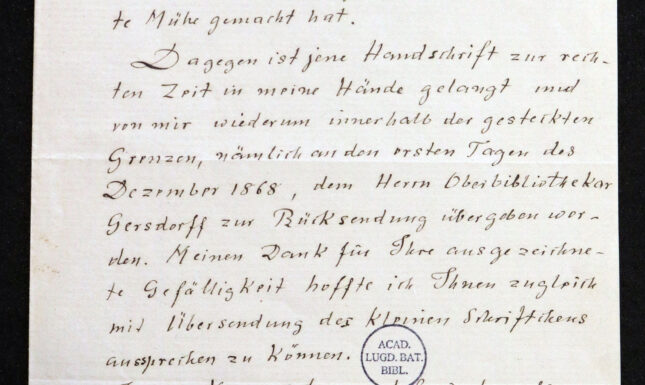
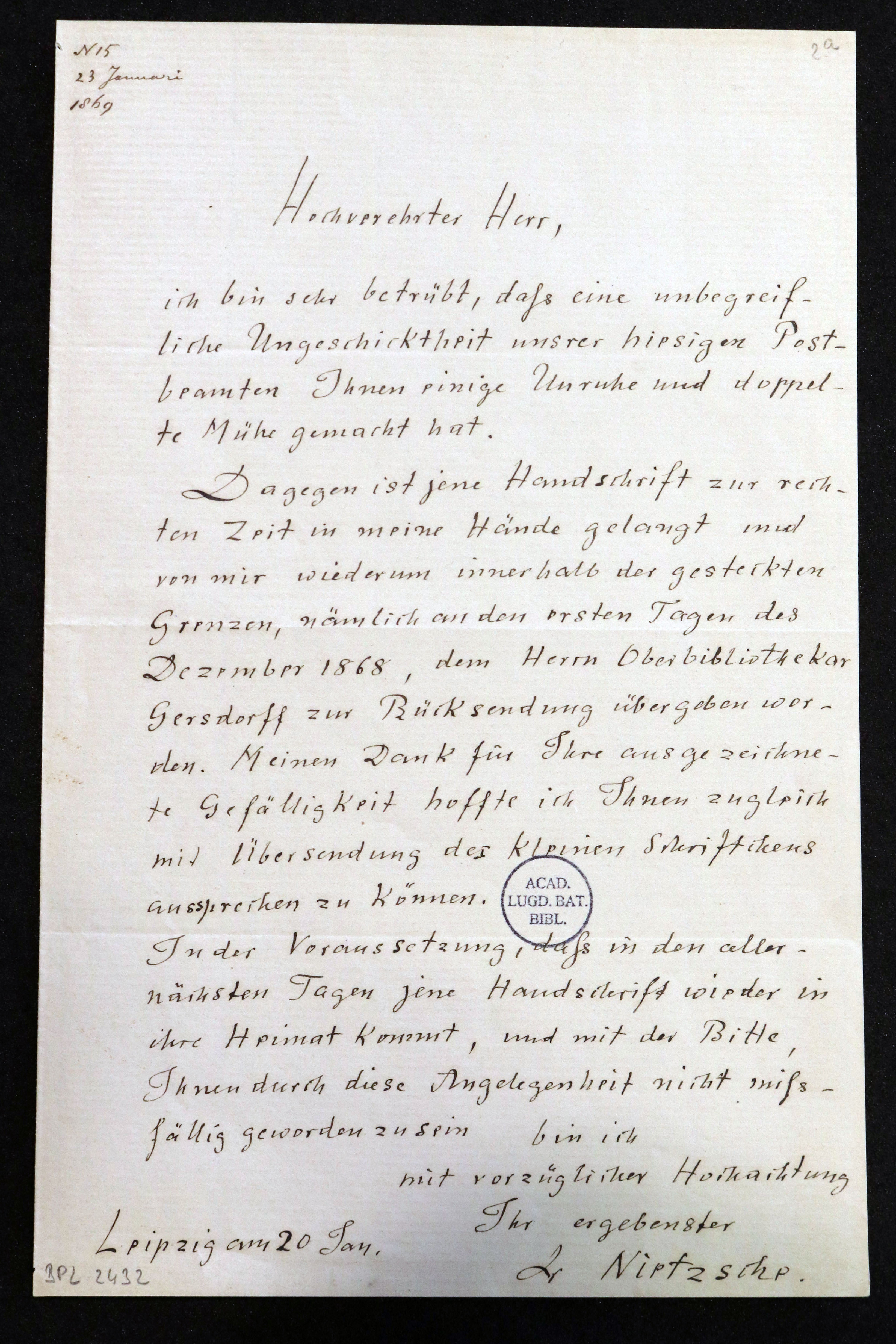
On the 20th of January, Nietzsche finally broke the silence. The manuscript, he claims, was returned to Oberbibliothekar Gersdorf at the agreed time. Wishing to excuse himself and save his good name, he hastens to blame the delay on ‘eine unbegreifliche Ungeschicktheit unserer hiesigen Postbeambten’. But Nietzsche’s loan slip, preserved in the library archive, suggests that he was maybe not entirely honest here. It shows that in reality, the codex was sent back on that very same day, the 20th of January – so almost two months too late!
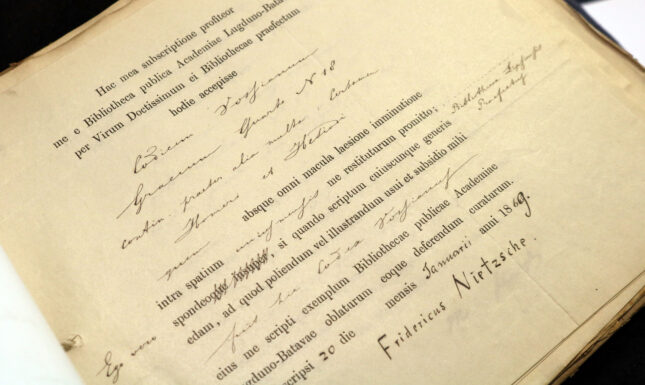
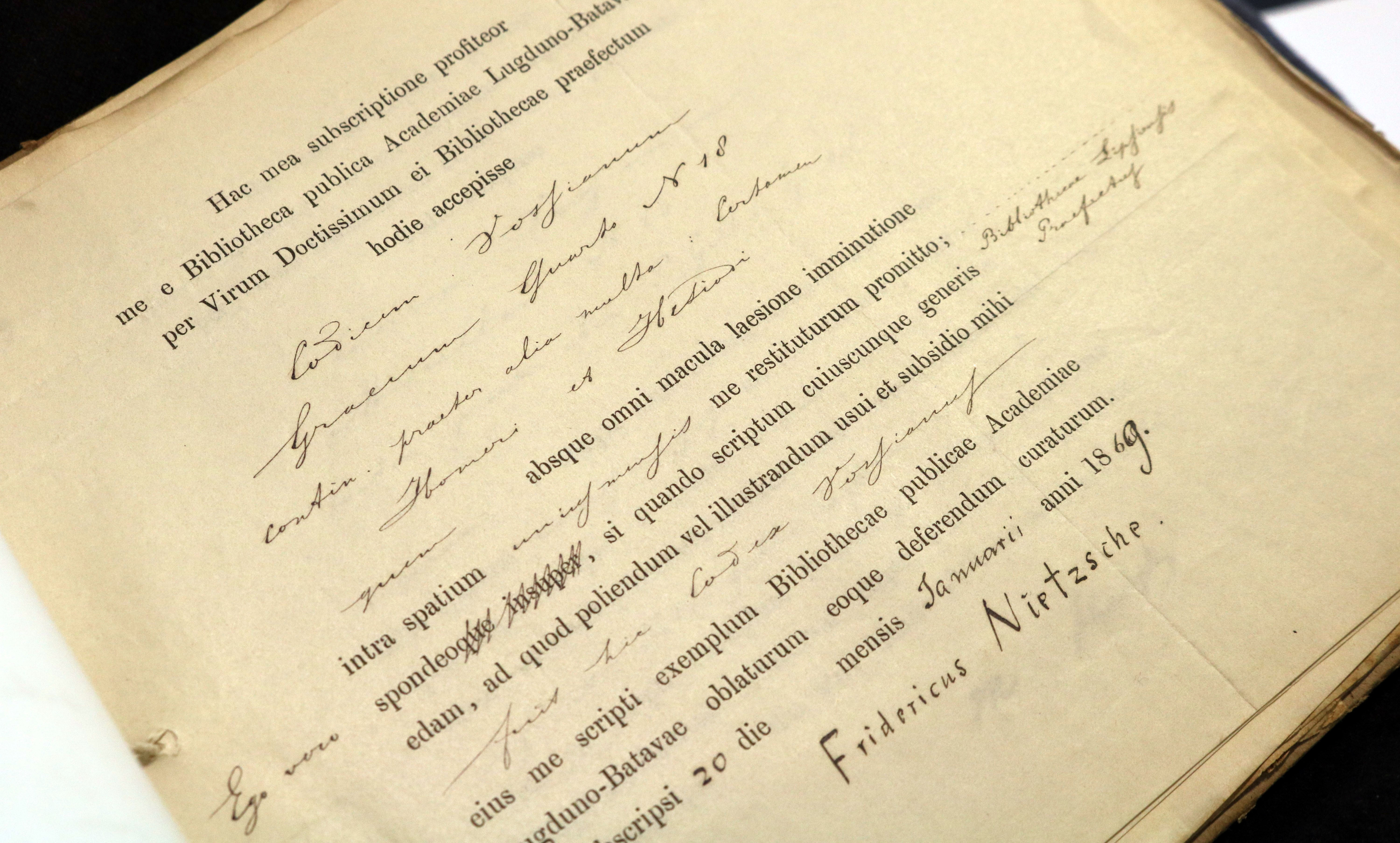
Fortunately, the manuscript made it back to Leiden safely. Meanwhile, Nietzsche proceeded to publish his critical edition in 1871, as well as an essay ‘Der Florentinische Tractat über Homer und Hesiod, ihr Geschlecht und ihren Wettkampf’ which appeared in two parts in 1870 and 1873 in the prestigious journal Rheinisches Museum fur Philologie. In both works, Nietzsche warmly acknowledges the Leiden library for their help.
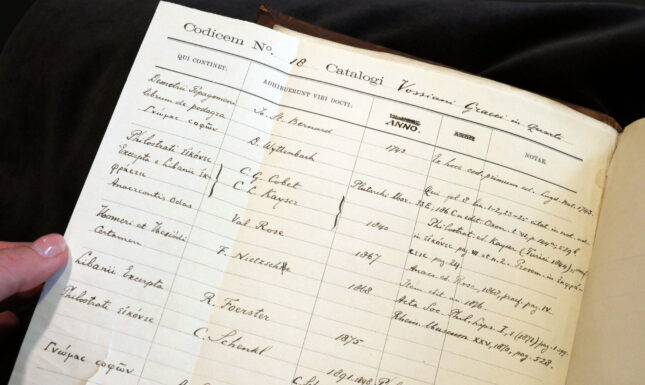
Over in Leiden, Nietzsche’s name and publications were meticulously inscribed in the list of users kept with the Vossianus. Both publications are still part of the Leiden collection as ‘Sonderdrucke’, unofficial prints usually disseminated as gifts by their authors. It is quite likely that Nietzsche, now true to his promise, donated these copies himself.
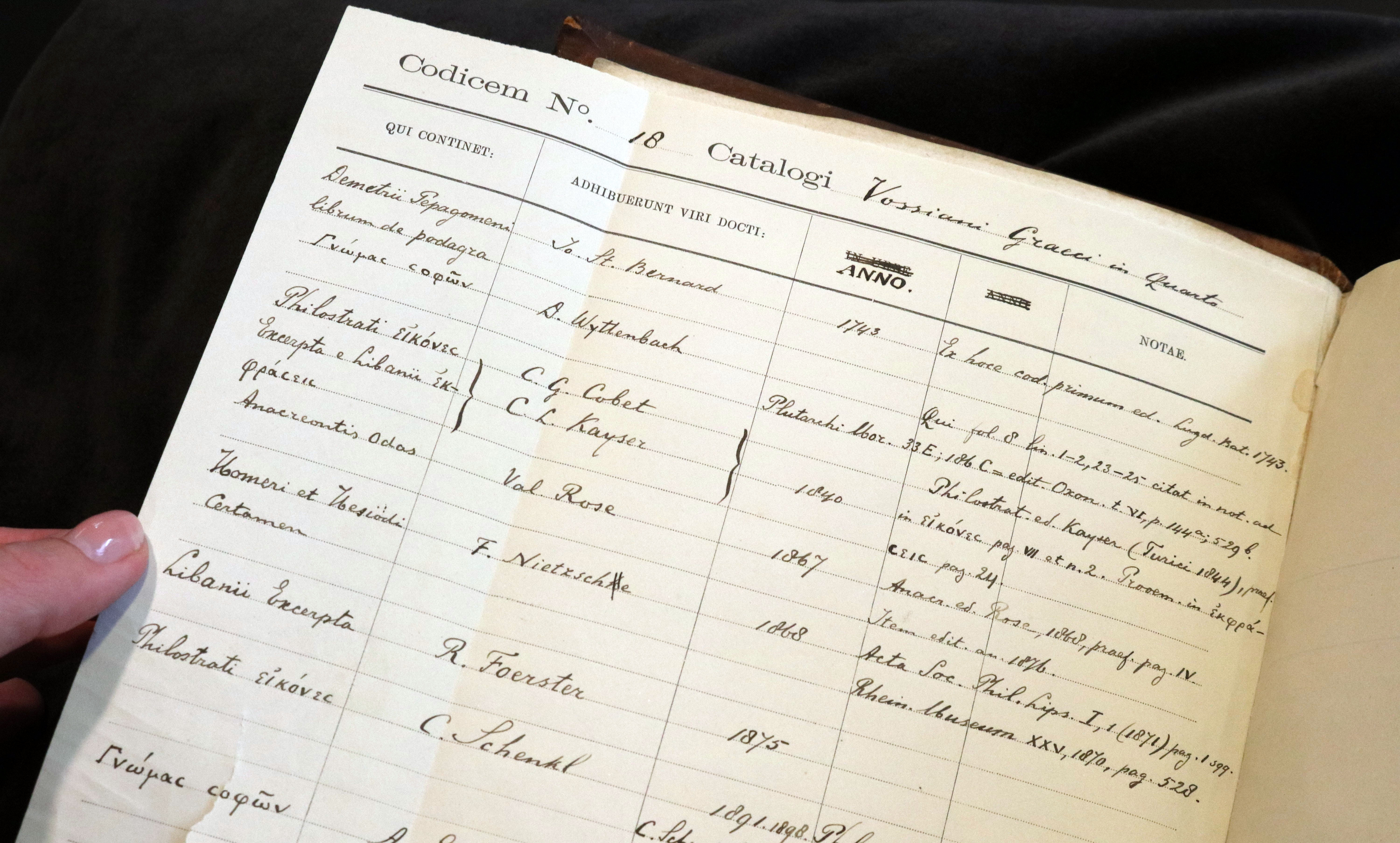
Nietzsche was probably one of the Vossianus’ most appreciative users, calling it ‘von entschiedenem Wert’. His fascination with the Leiden codex is quite interesting in itself. As a source for the Certamen’s Greek text it is usually not given much attention, as it is only a copy or apograph of the older and more important Florence manuscript Laur. 56, 1.
So why did the Leiden codex hold such appeal for Nietzsche?
Academic circles in Nietzsche’s time were dominated by heated discussions about Homer and the nature of his authorship of the Odyssey and Iliad. The Certamen, one of the few ancient sources on Homer’s life, therefore enjoyed great popularity. The 1573 first edition by the French humanist Henri Estienne was widely read and enjoyed various reprints.
But Estienne never reveals his manuscript source, so nobody knew where the text had actually come from. A few years before Nietzsche wrote to Pluygers, Valentin Rose (just above Nietzsche in the list of users) rediscovered Laur. 56, 1 in Florence. He also identified the Leiden manuscript as its copy – a copy made by Estienne himself. This must have been exciting: all of a sudden, the mysterious Certamen had manuscript sources to study and compare: it thus entered the realm of textual criticism. Nietzsche, eager to make his name as a scholar, immediately jumped on the occasion.
So although considered of lesser importance later, in the direct aftermath of Rose’s discovery the Leiden codex was the missing link between Estienne’s popular printed edition and its sensationally recovered manuscript source: Nietzsche in fact considers the Vossianus to be the very manuscript Estienne prepared for and gave to his typesetter.
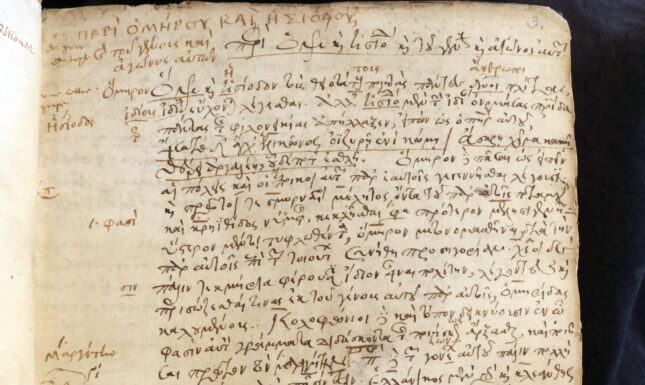
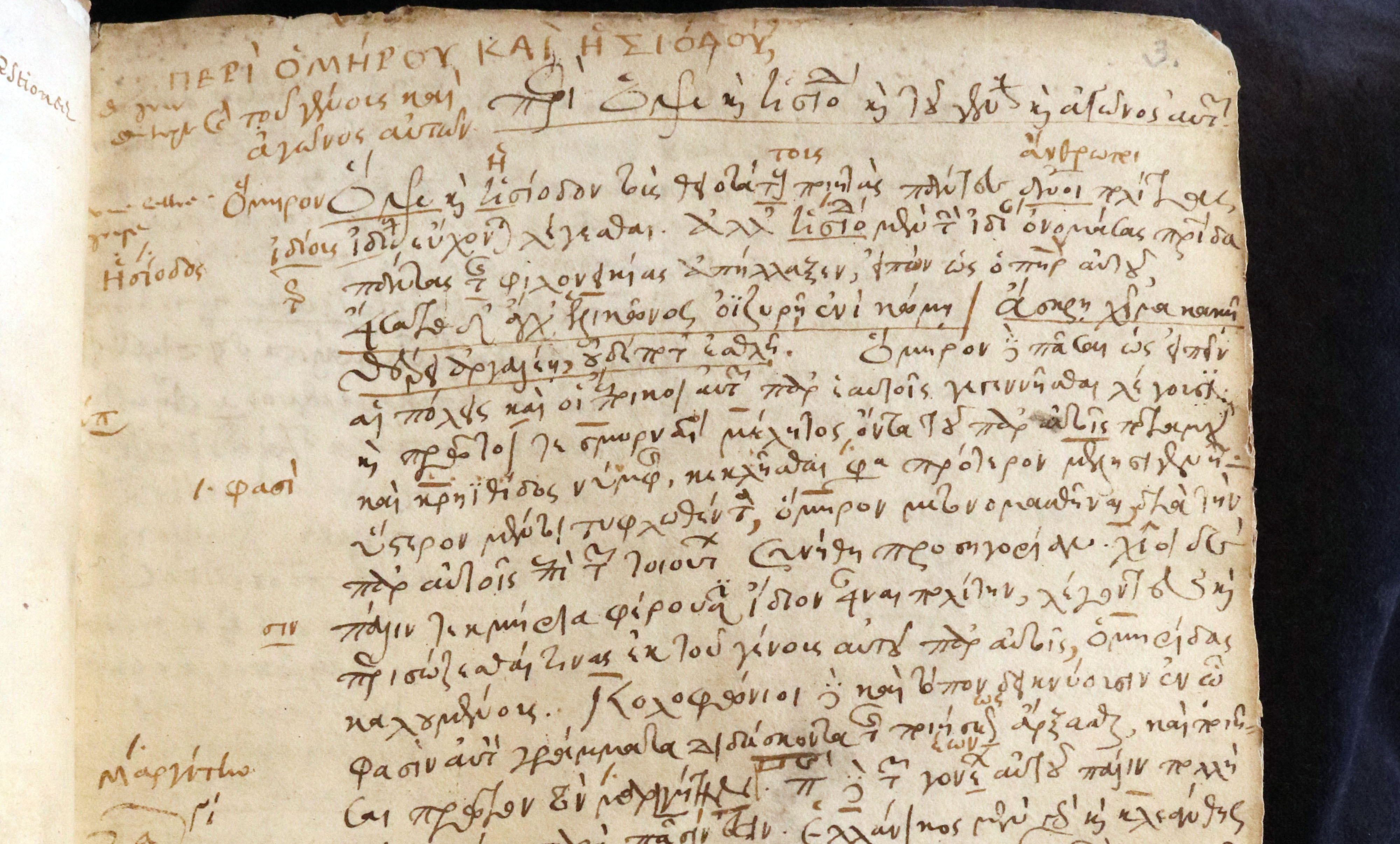
Nietzsche was not so much interested in establishing the Urtext, the oldest and most original version. By his own admission, he was interested in the entire history of the text – in which he considered Estienne’s endeavors to be a key milestone. This explains his singular and for his time somewhat uncommon appreciation of the Leiden codex.
Nietzsche would eventually abandon Greek philology. But the ancient world, Homer, and the concept of the Greek contest or agon would continue to play a part in his philosophy and in many of his writings. The smallest seed for this may just have sprung from the Leiden Library.
Further reading:
Bassino, Paola, The Certamen Homeri et Hesiodi: a commentary, De Gruyter 2018
Joachim Latacz, ‘On Nietzsche’s Philological Beginnings’ in: Anthony K. Jensen, Helmut Heit, Nietzsche as a scholar of Antiquity. Bloomsbury 2014
James Porter, Nietzsche and the Philology of the Future, Stanford University Press 2000
Ernst Vogt, Nietzsche und der Wettkampf Homers Antike und Abendland Vol.11.1, p.113-126
Alexey Zhavoronkov, Nietzsche and Homer. De Gruyter 2021
Editions of the letters to Pluygers can be found in the E-KGWB as numbers 597a and 610a. They were not part of the printed edition of the Kritische Gesamtausgabe (de Gruyter, 1975–2004), suggesting their relatively recent discovery by the editors.
Many thanks go to various members of the Philatelic Academy of the Netherlands for their kind and ready help in making sense of the stamps on the envelope.