‘I was born into Cantonese’ – In kind memory of Liang Xiaoman

Issue 10 of Wings provides a comprehensive insight into the world of contemporary, unofficial Chinese women's poetry. It also serves as an important and rare printed record of the late Liang Xiaoman’s artistic legacy, capturing her intellectual reflections on humanity during times of global crisis.
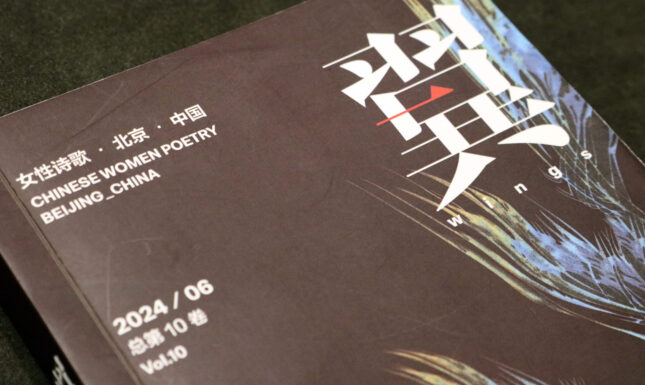
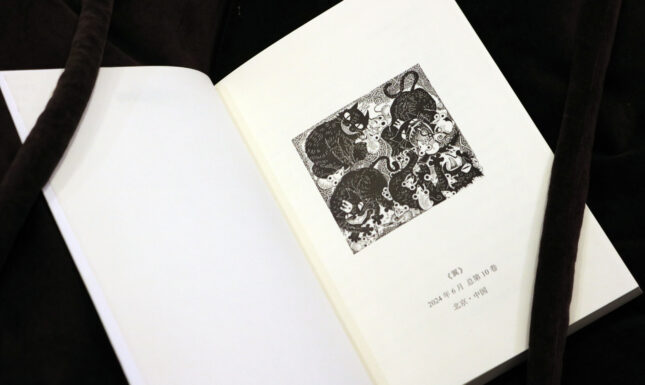
In November 2024, I spent a week researching in the Special Collections Reading Room at Leiden University Libraries. There, I had the opportunity to browse through precious items from the collection of Unofficial poetry from the People's Republic of China (UNPO). This was just under a week after the untimely passing of Liang Xiaoman (梁小曼, 1974 – 2024). I was pleased to have the opportunity to work with a hard copy of Wings (翼), No. 10, published in June 2024.
Wings is an unofficial (only) women’s poetry journal with an all-female editorial board. They frequently publish on WeChat (a Chinese social media platform) but it is only occasionally that they put together a printed volume, which is also why such paper issues are so valuable.
The tenth issue, in total, is a rather thick volume, especially compared to previous issues, presenting a wide selection of poems by different generations of Chinese women poets. I remembered that it contained four of Liang’s poems, since Wings shared the table of contents on their WeChat with their readers in early July that year. It also features a preface by Li Na (李娜) and an epilogue by one of the chief editors and founders, Zhou Zan (周瓒). As Zhou Zan was conducting her own research in the UNPO collection at the time, I was able to consult her as needed.
On the evening of 13 November 2024, I was preparing for the following day’s class. The previous week, I had assigned to the students an essay by Liang Xiaoman entitled “I Was Born into Cantonese” (我生于粤语之中). I was devastated to learn of Liang Xiaoman’s death that day, caused by serious health issues.
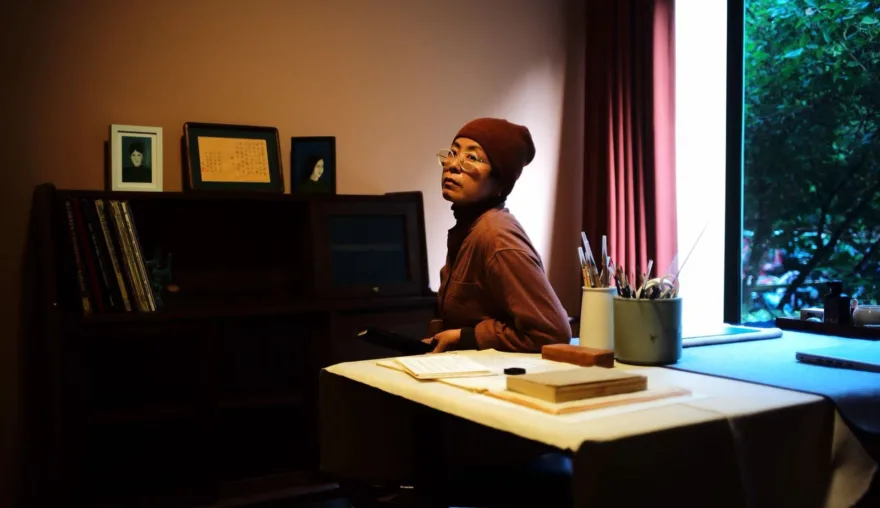
Liang was a brilliant multi-skilled artist. She was a poet, essay writer, photographer, calligrapher and painter. She was in touch with many poets, attended poetry readings and exhibitions, yet at the same time, she lived a low-key, silent life, focusing on her artwork and translating poetry, mostly from English into Chinese.
Liang was well-versed in Chinese and foreign poetry, particularly that from Europe and the Americas. Her poetry is intellectual, gentle, and diverse, rich in imagery drawn from nature. It often refers to her close circle, including her partner, family, friends, as well as public figures, artists, and poets. Liang’s poetry is neither overexposed nor pathetic or haughty. It evokes a meditative tone. It is metaphorical and sometimes heavy, but often imbued with gentle humour. The language can be tricky, since Liang occasionally incorporates Cantonese, her native language.
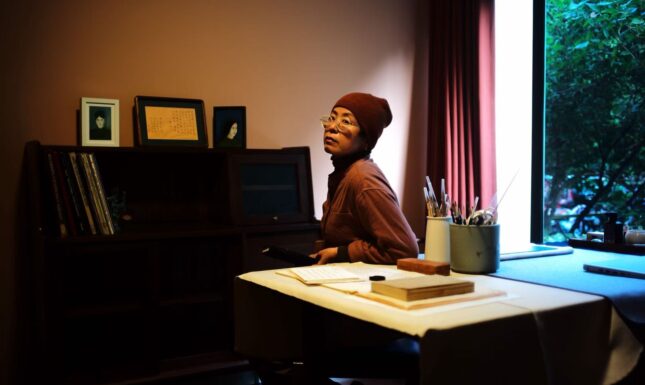
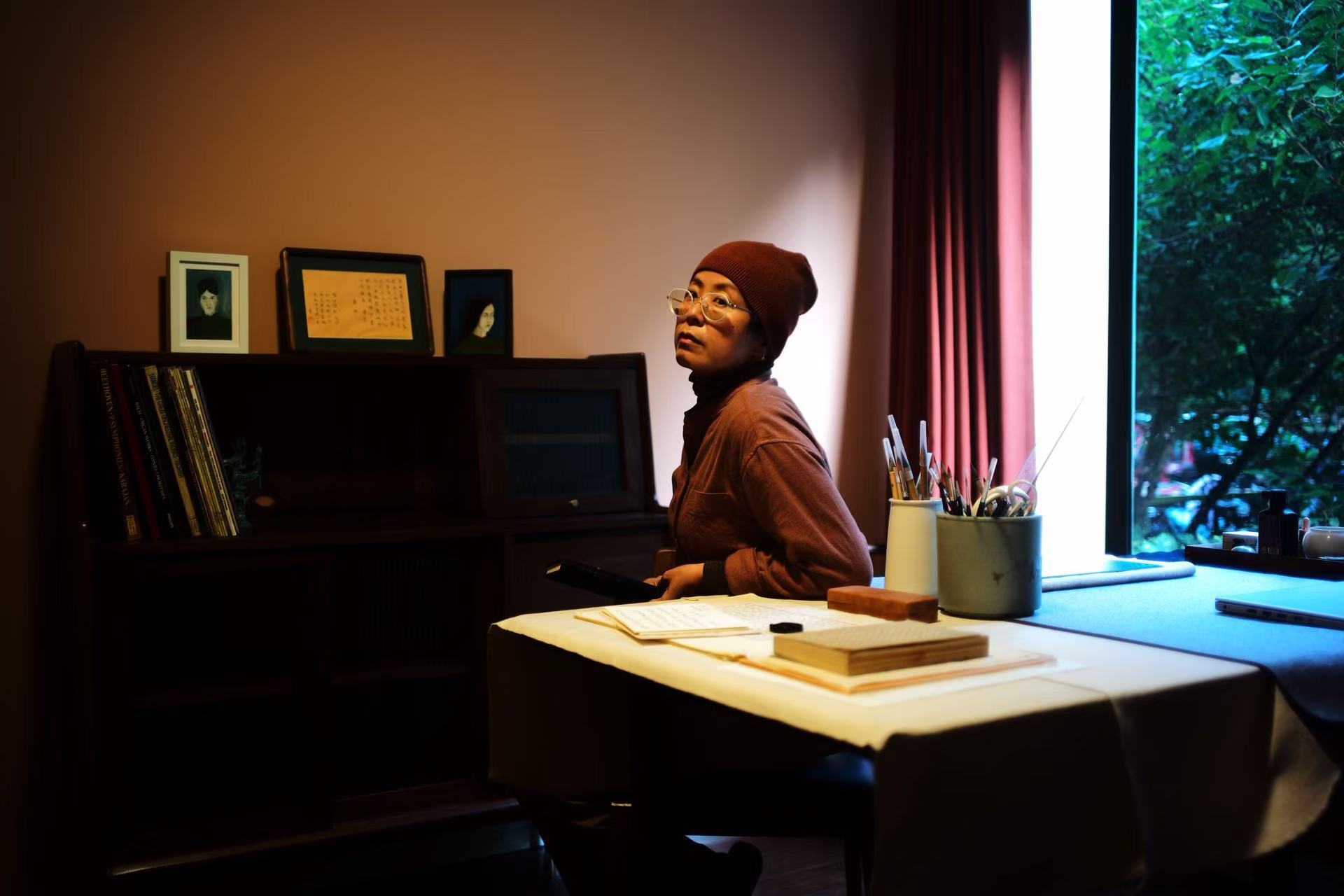
Zhou Zan recalls that among her friends, Liang was quiet and serious. She was comfortable in her own company yet mindful of others' feelings, offering her warmth without reservation. Liang published two poetry collections: System Error: Poetry and Photography (系统障碍:诗与摄影, 2020) and Factorisation of Red (红的因式分解, 2023). Liang started writing poetry at the age of 35, producing work at a slow pace, but she had a clear understanding of a poet's responsibilities. Her poetry also matured artistically over time. During the three years of the rampant COVID-19 pandemic, her poetry revealed concerns about China's socio-political realities and the human condition. While she expressed reservations about the radical feminist discourse prevalent in recent internet discussions of gender issues, her poetry clearly showed that Liang is a staunch ecofeminist.
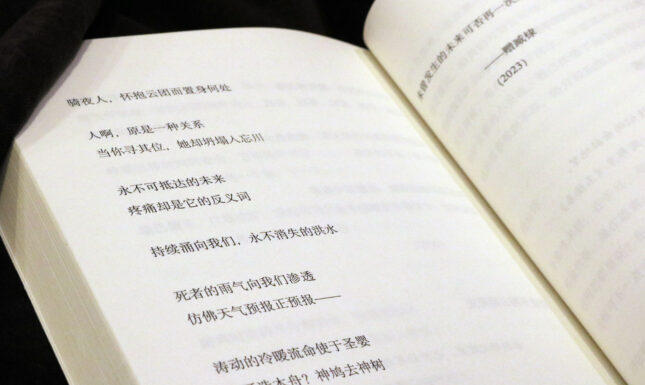
The four poems by Liang selected for the latest issue of Wings were written in 2022 and 2023. Poems ‘The Sun Also Travels Westward’ (日也西行) and ‘The Ball Lightning’ (球状闪电) feature heavy undertones of recent European and global affairs, particularly the pandemic and the ongoing war in Ukraine which raise concerns not only among those most directly affected, but also the entire global community. Liang refrained from being pathetic, which makes the message between the lines more immediate and relevant.
Two of the poems are dedicated to other Chinese poets; the poem ‘Emptiness’ (空) to the renowned Tang poet, Chen Ziang (陈子昂), ‘A Brief History of Riding at Night with Clouds in my Arms’ (骑夜怀抱云团简史) to the contemporary Chinese poet Zang Di (臧棣). Here are the last five lines of the poem dedicated to Zang Di (my translation), which may encourage UNPO readers to read the rest of Liang's poems in the latest issue of Wings:
‘The night is so weary, things come and go
the night rider embracing the clouds is amnesiac
will we leave after the thunder
to listen to the howl that never resounded across the earth
can the future that never happened, return once more’
Sarka Masarova (with many thanks to Zhou Zan), January 2026
About the author
Sarka Masarova (Šárka Masárová in Czech) is a faculty member at the Department of Sinology, Faculty of Arts, Charles University, Prague, Czechia. Her research specialises in contemporary Chinese poetry since the 1980s, with a particular focus on unofficial women’s poetry from the PRC.
Further exploring
Earlier issues of Wings have been digitised and can be consulted online.