Mapping Medieval Scholarship: Arabic Audition Certificates from the Leiden Special Collections

Traces of use in old books—annotations, marginal glosses or coffee stains—reveal how readers engaged with texts through the ages. Certain Arabic manuscripts include notes that reveal the social history of their readership.
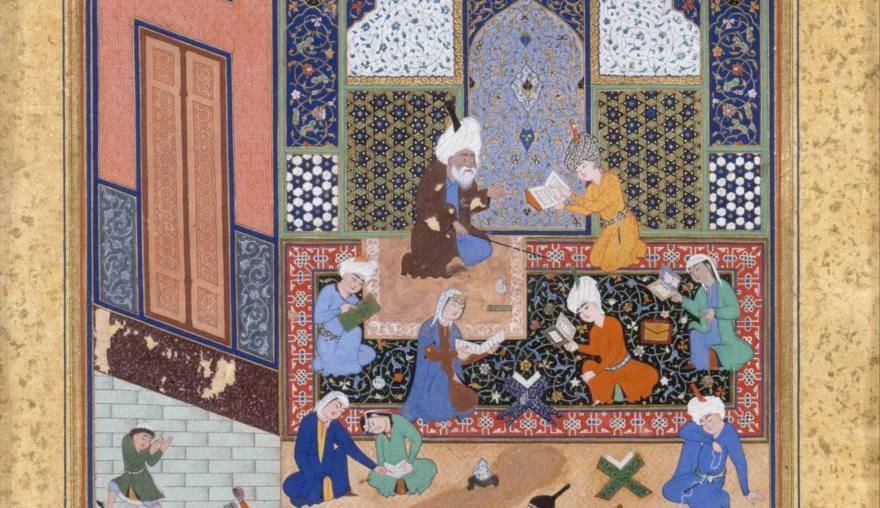
Many Arabic texts were read out loud in collective reading sessions. We know this thanks to a particular type of marginal notes, typically found at the beginning, in the margins, or at the end of Arabic manuscripts—audition certificates (ijāza, samāʿ, ṭabaqat al-samāʿ). Such certificates serve as official records of the transmission of a book’s text from teacher to student. They were written after a text had been read aloud by either the teacher or a student, marking the students’ right to teach the same text in future sessions.
Audition certificates are a crucial documentary practice in Arabic manuscript cultures. Beyond dates and locations, these certificates offer other historical data. They include the names of teachers, students, readers and preserve specimens of the handwriting of scholars and scribes. This information provides glimpses into scholarly life across cities and institutions. It also opens windows onto social history, particularly for groups—such as women and enslaved people—who often remain underrepresented in other historical sources.
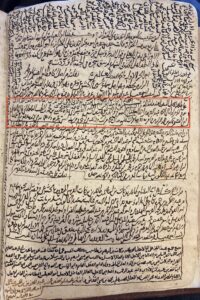
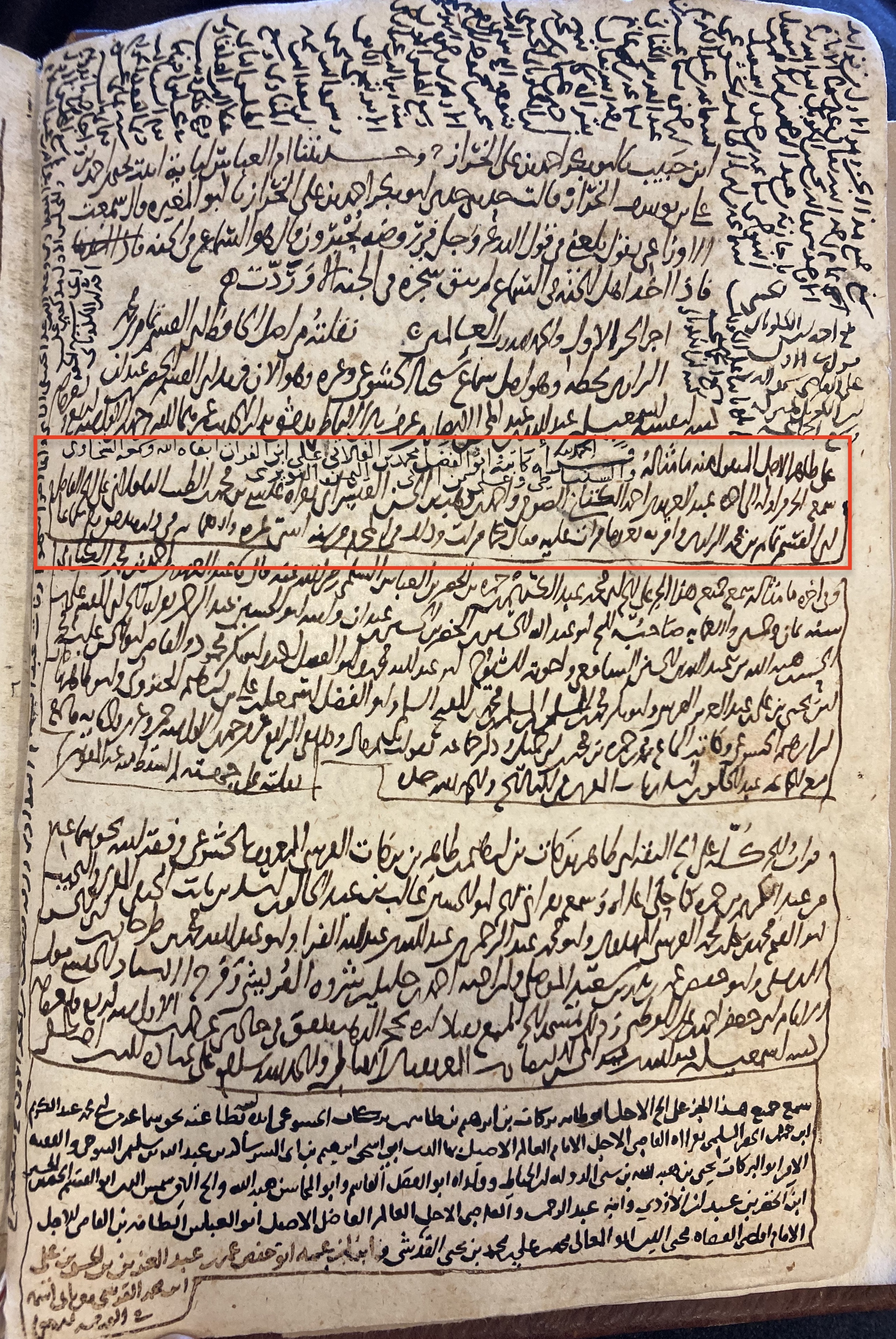
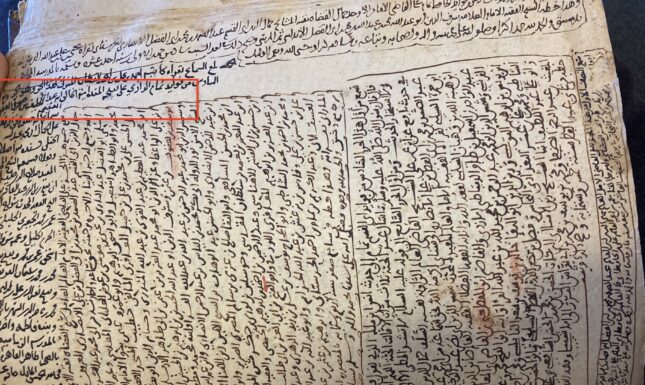
MS Leiden Or. 580 in particular captures the extraordinary temporal and geographical scope of this source material. It preserves a typical text of post-canonical hadith transmission, the Fawāʾid al-Ḥadīth by Abū al-Qāsim Tammām b. Muḥammad b. ʿAbd Allāh Ibn al-Junayd al-Rāzī (d. 414/1023 CE), a collection of reports on the sayings and actions of the Prophet Muḥammad transmitted through chains of teachers and students. The manuscript was copied in Damascus in 595 AH (1198/99 CE), and was based on the author’s own copy. One copied certificate records the author’s authorisation during a session held in his private home two years before his death. This demonstrates how closely the author was involved in teaching his own text, and how much students valued the opportunity to study directly with him.
The manuscript is brimming with information on the text’s transmission. It documents a total of 305 sessions and thus holds the proud first place among the 5660 certificates spanning a geographical range from al-Andalus and North Africa to Bilād al-Shām and Central Asia that can be found on the Audition Certificates Platform (version 5.0, 1 December 2025), a database run by Konrad Hirschler and Said Aljoumani at Hamburg’s Centre for the Study of Manuscript Cultures. In Damascus alone, 191 sessions dedicated to the study of this hadith collection were held, including fourteen attended by Faraj al-Ḥabashī, the slave of the scholar and jurist Abī Jaʿfar al-Qurṭubī (d. 596/1200), and four attended by an individual called Luʾluʾ b. ʿAbd Allāh b. Aḥmad al-Ḍarīr, who was also likely of enslaved background. These sessions took place in numerous Damascene madrasas, several mausolea, private houses and the Umayyad Mosque, and continued until 690 AH (1291 CE). These records highlight the wide social reach of knowledge transmission and the participation of individuals from diverse social backgrounds.
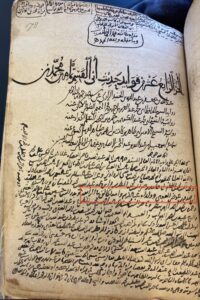
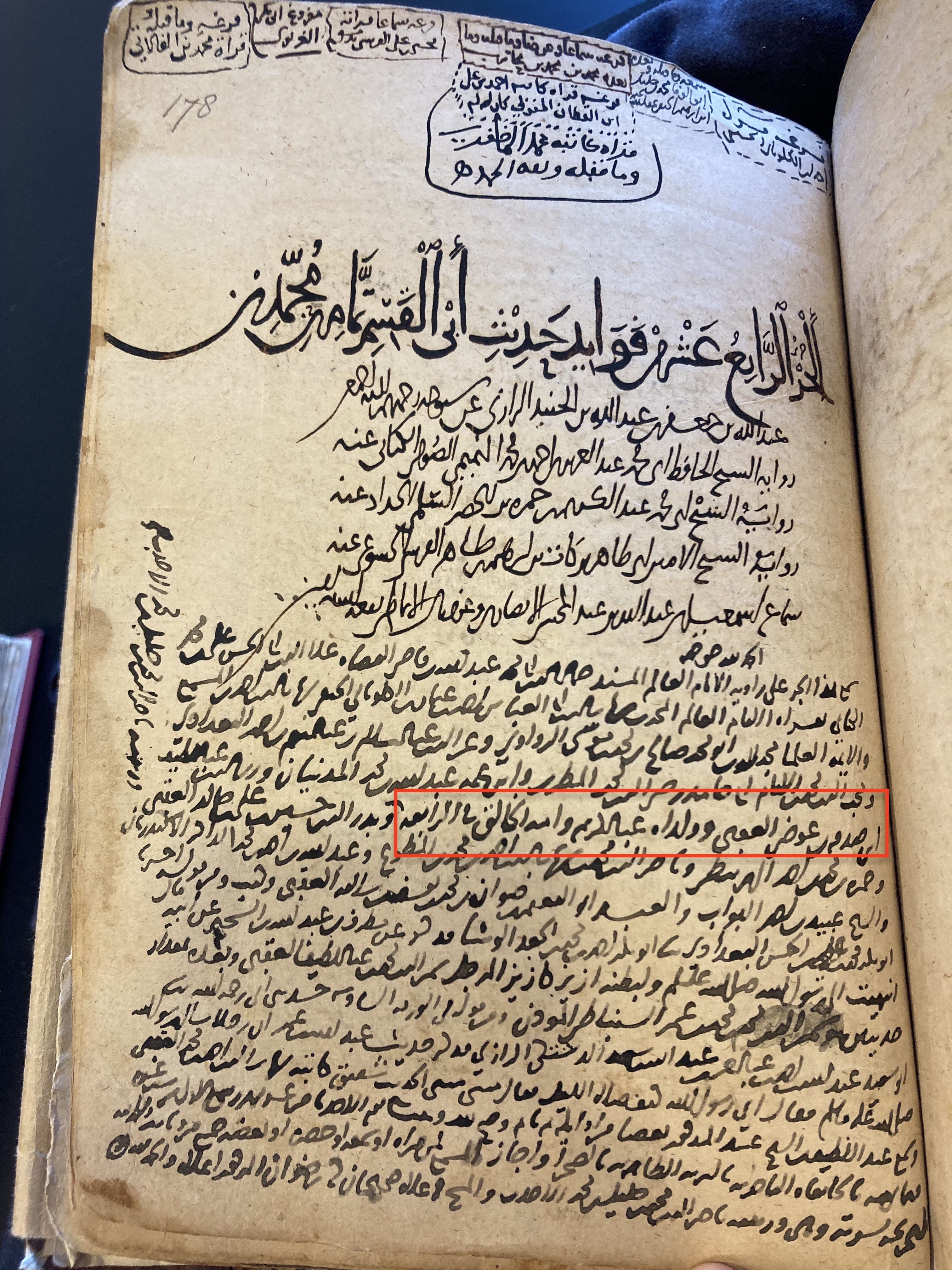
Roughly forty years later, this manuscript resurfaced in Cairo, where the next certificate was issued in 733 AH (1332 CE). Over the following 150 years, Cairo witnessed thirty-seven further sessions. One of the listeners was Amat al-Khāliq bt. ʿAbd al-Laṭīf b. Ṣadaqa al-ʿUqbi, a woman. She attended at least four sessions as a four-year-old girl when her father brought her and her brother ʿAbd al-Karīm to readings at the Nāṣiriyya mausoleum and the adjacent Sufi convent in 816 AH (1413 CE).
In her late seventies, Amat al-Khāliq reappears in the certificates—this time as the authorised transmitter. In this function, she took part in five sessions at a prestigious institution: Cairo’s Zimāmiyya Madrasa. The audition certificates allow us to contextualise her, including her age, teaching locations and broader scholarly milieu. Such details are rarely preserved for female transmitters in medieval chronicles and other texts. While such narrative sources show that women’s participation in medieval Islamic education as transmitters and teachers was far from extraordinary, documentary evidence provides a much more fine-grained picture of how female agency played out in practice.
The final recorded session in this manuscript took place sixty years later, in 957 AH (1550 CE), at Cairo’s Muhimandāriyya Madrasa. With this certificate, the remarkable three-centuries long transmission of this book was finally completed. Beyond the long history of Muslim readers’ recorded engagement with the manuscript, it also preserves a series of ownership statements. Like many other manuscript notes from Leiden’s Special Collections, these ownership statements were recorded by Boris Liebrenz as part of the Bibliotheca Arabica project’s reference work, Khizana.
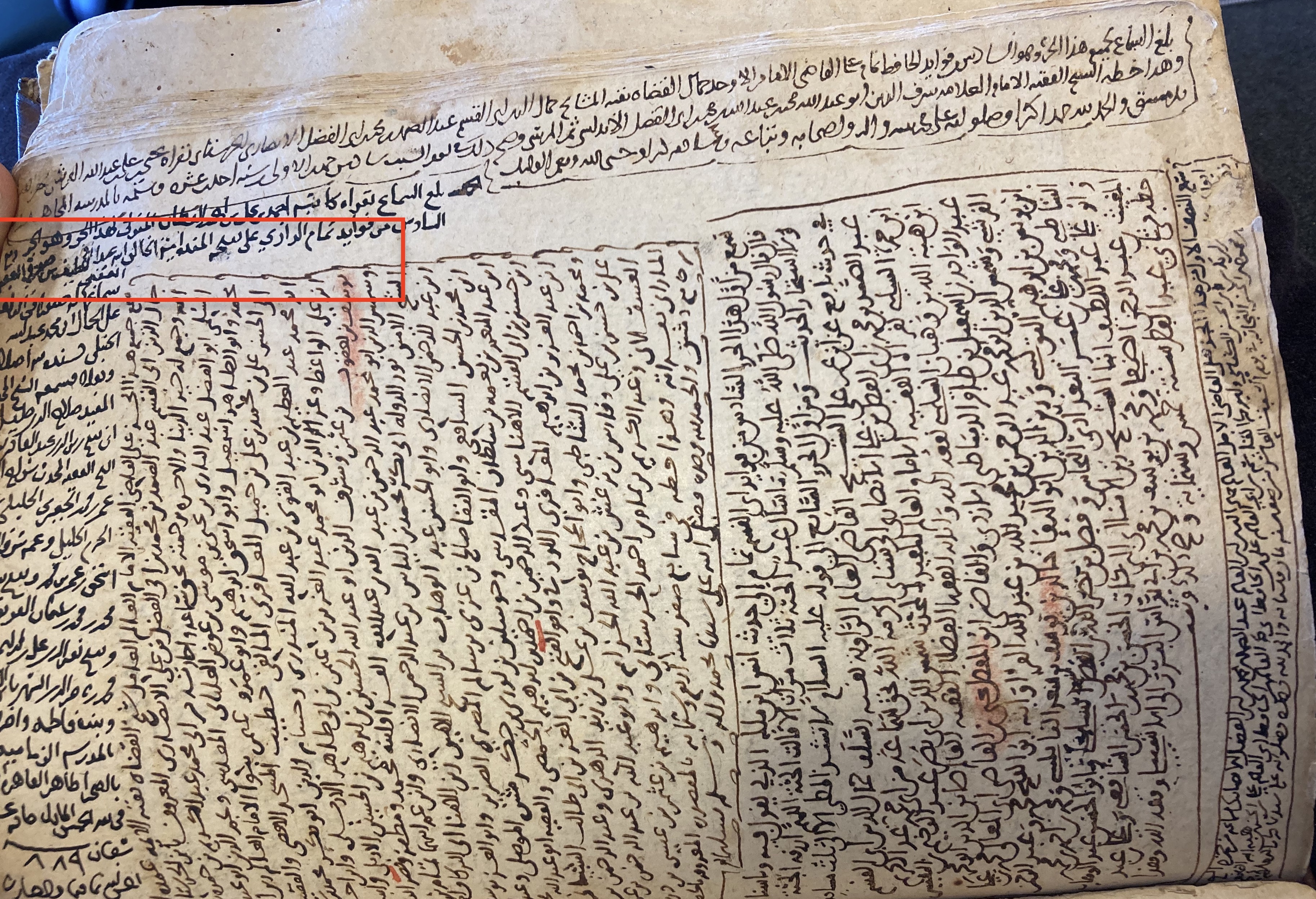
Alongside the participation of women in scholarly transmission, this single manuscript reflects the movement of both material culture and scholarly knowledge between two major centres of Islamic learning, Damascus and Cairo. It is far from an isolated example: similar patterns appear, for instance, in another Leiden manuscript, MS Leiden Or. 141, underscoring the dynamic circulation of texts across regions.
Through the Audition Certificates Platform (ACP) the Leiden material is now situated within a larger corpus of audition certificates. The collected Leiden corpus currently comprises 418 audition certificates found in twenty-two Arabic manuscripts. I identified the certificates based on Jan Just Witkam’s inventories; Said Aljoumani at Hamburg University transcribed and annotated the material for the ACP. Among other things, the Leiden sub-collection records 240 sessions in Damascus, 74 in Cairo, three in Baghdad, and two each in Aleppo and Mecca, dating from 412–957 AH (1021–1550 CE).
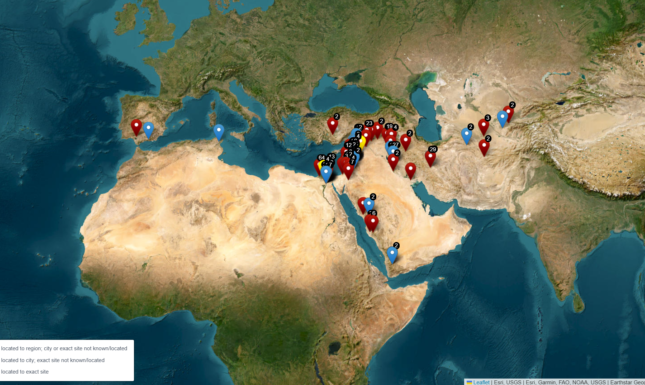
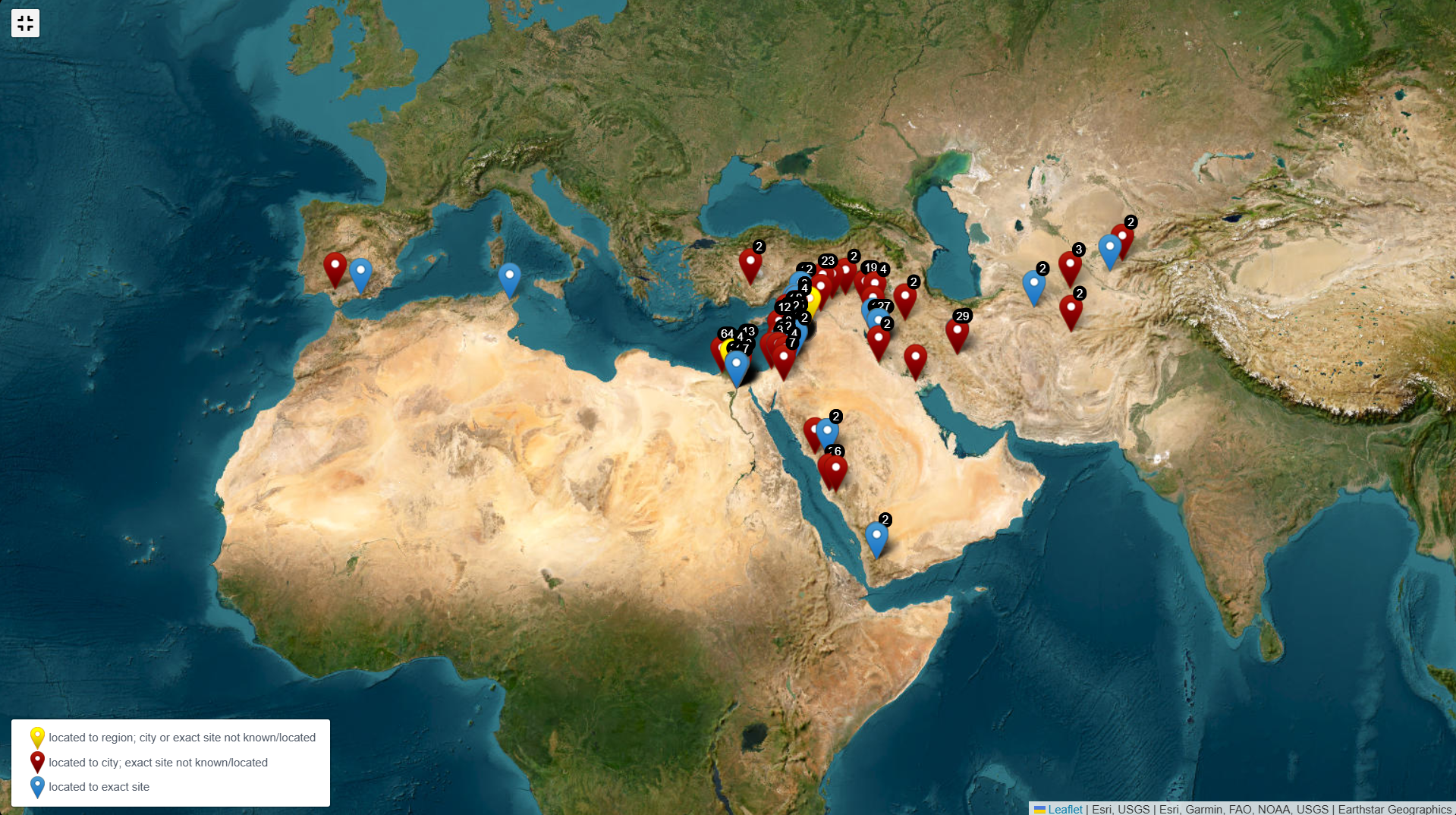
The material mirrors broader patterns already visible in the wider ACP corpus. The certificates predominantly relate to hadith transmission. The largest share originates from Damascus—though it remains unclear whether this reflects a historical trend or modern-day biases in library holdings. Chronologically, the majority date from 550–750 AH (1150–1350 CE), with notable examples from earlier and later periods.
Many more cases await discovery in the ACP. Its growing corpus allows us to trace these scholarly networks and object biographies across institutions and collections—revealing the transmission of knowledge in the medieval Islamic world.
About the author:
Vincent Engelhardt is a research MA student in Middle Eastern Studies at Leiden University and works as research associate for the Audition Certificates Platform.