The murder of Floris V sung: the donation of a 16th-century song sheet

The murder of Count Floris V became the subject of a history song shortly after his death. Wim van Anrooij describes how he found a sixteenth century song sheet containing an important version of the text. It was donated to the Maatschappij der Nederlandse Letterkunde in 2024.
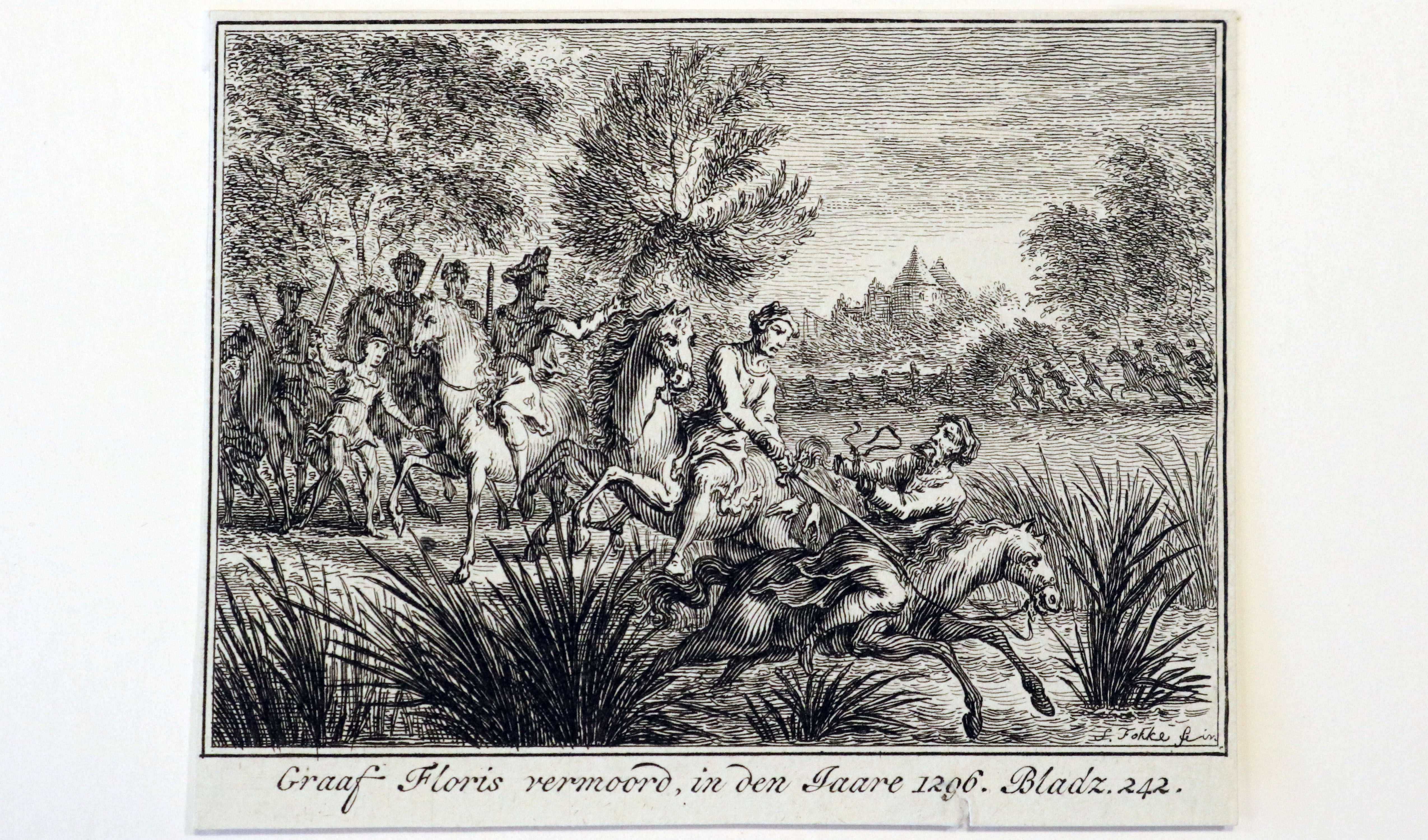
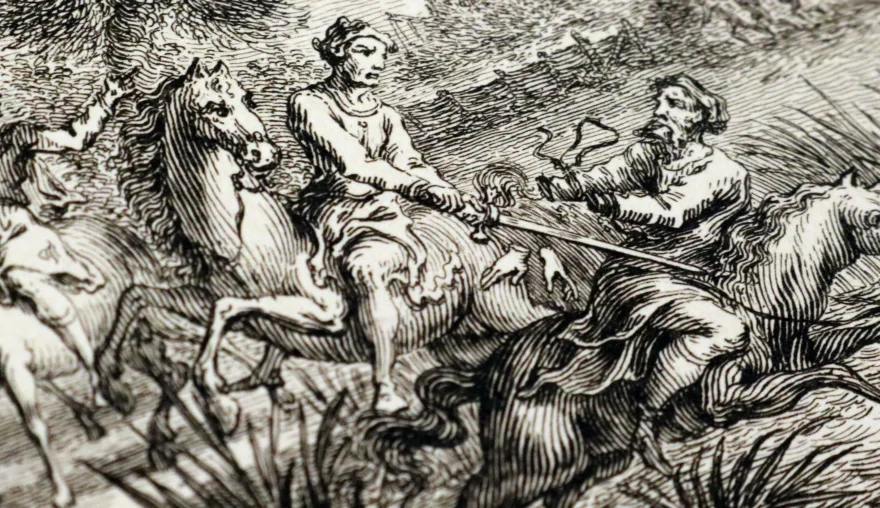
Shortly after the murder of the Dutch count Floris V in 1296, a song was circulated in which his unfortunate end and the unpleasant events that preceded it are described. Under the guise of a hunting party that followed a gathering in Utrecht as an opportunity for relaxation, the count was captured by a group of nobles with whom he had shared a meal only hours earlier. It was Count Floris himself who had organised the gathering, in order to establish peace between the Utrecht bishop Jan van Sierck and a number of rebellious nobles, including Gijsbrecht van Amstel and Herman van Woerden. The nobles had secretly agreed well in advance to depose the Dutch count and take him to England. The English king Edward I was involved in the plot. The kidnapping got out of hand near the city of Naarden. Peasants laying in ambush demanded the count be released. This prompted Gerard van Velsen, one of the Dutch nobles, to brutally murder the count.
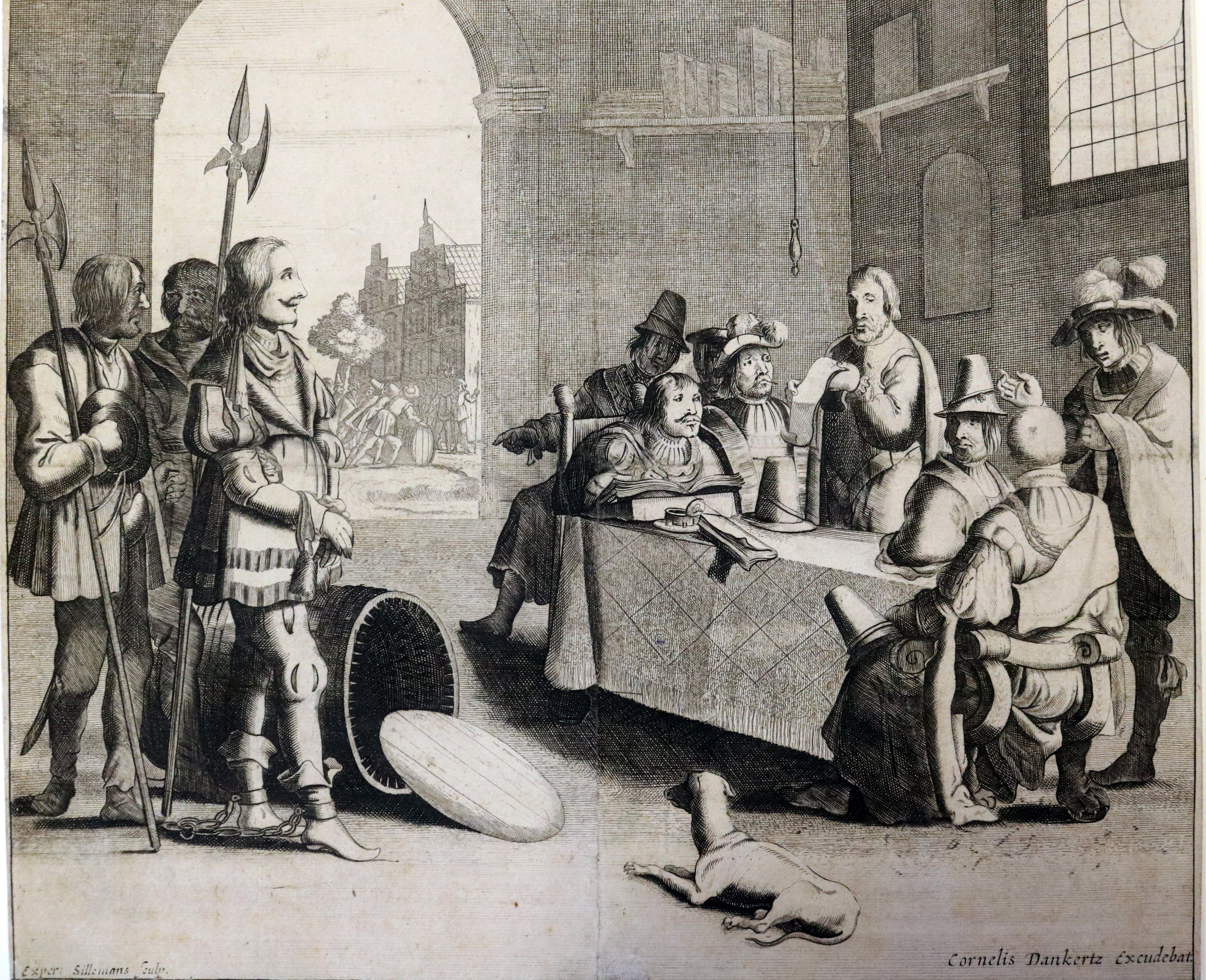
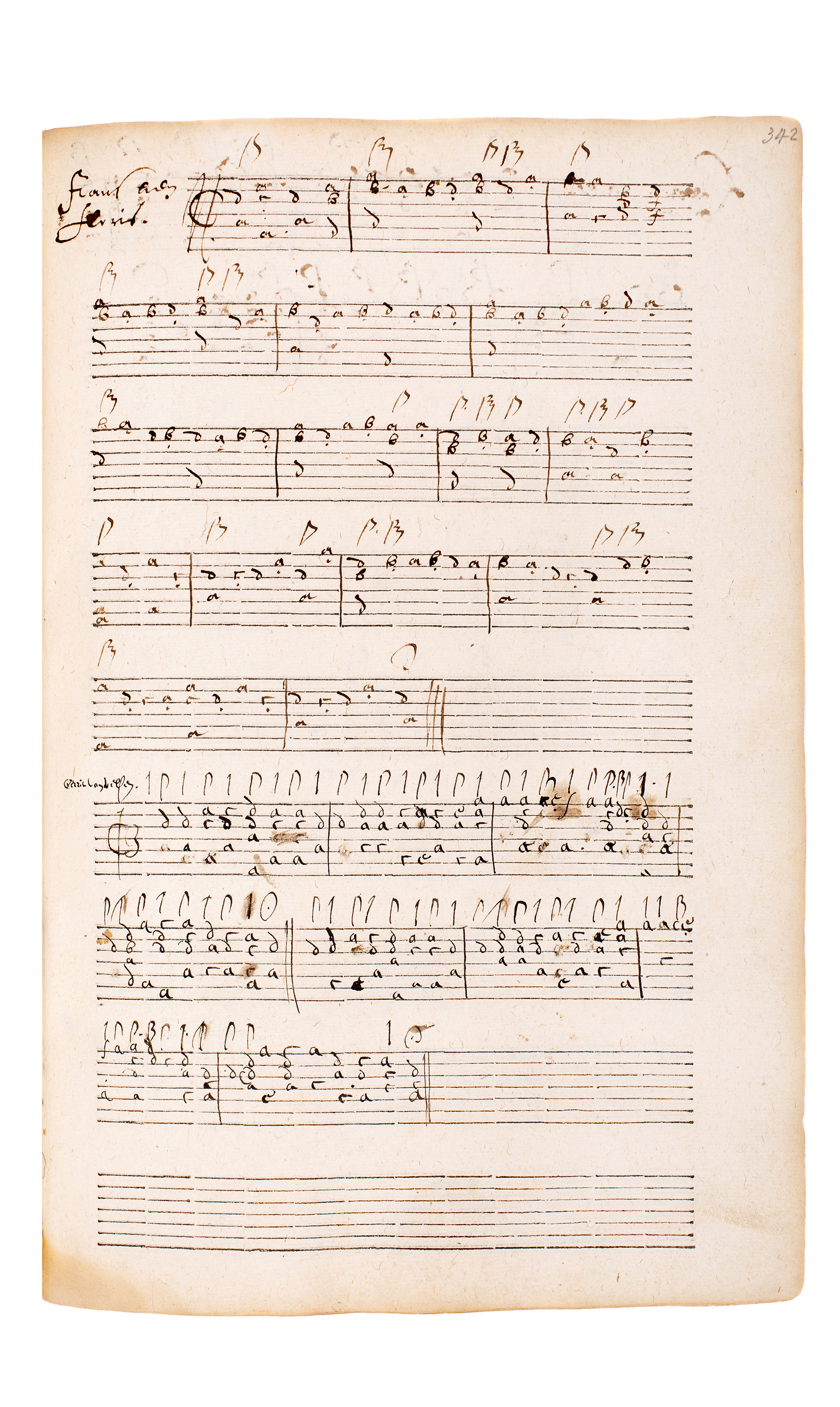
It is now more than thirty years since I first became acquainted with the history song and since then it has crossed my path more than once. Over the years it has become increasingly clear to me that one cannot speak of ‘the’ history song, because there are various versions and adaptations. This confusion and the emergence of new source material prompted me to a new critical edition, with an introductory study in which the rich textual and reception history and the interaction between literature and historiography, as well as that between text and image, would be described from around 1300 to the present. Because that is what is special about this song: it was not only sung in the Middle Ages, but also in the centuries that followed, with a peak in the seventeenth century. In 1992 Camerata Trajectina released a version on CD. The tradition extends over medieval and later sources, involving manuscripts, printed songbooks and loose sheets on which one or more songs have been printed or copied. Catharina van de Graft (1874-1969) provided a first edition in her Amsterdam dissertation Middelnederlandsche historieliederen, toegelicht en verklaard (1904). She was already aware that the melody was recorded in Thysius’ Lute Book.
Thanks to Drs. Ed van der Vlist and Dr. Jeanne Verbij-Schillings, I got the scent of a new source for the song in 1999. In an auction catalogue from November 1938 a sixteenth-century handwritten page with the song was offered for sale. The Bibliotheca Neerlandica Manuscripta (UBL) not only contains a complete copy of the catalogue, but also the description of the sixteenth-century sheet cut out of another copy of the catalogue, in which someone noted the name and address of the buyer in the margin: Herbert Jochems (1912-1975), who at the time lived at Oude Singel 110 in Leiden. He was a master of law and also known as a landscape architect, sculptor, painter and long-track skater at national level. The song sheet is now known in the literature as the Jochems manuscript.
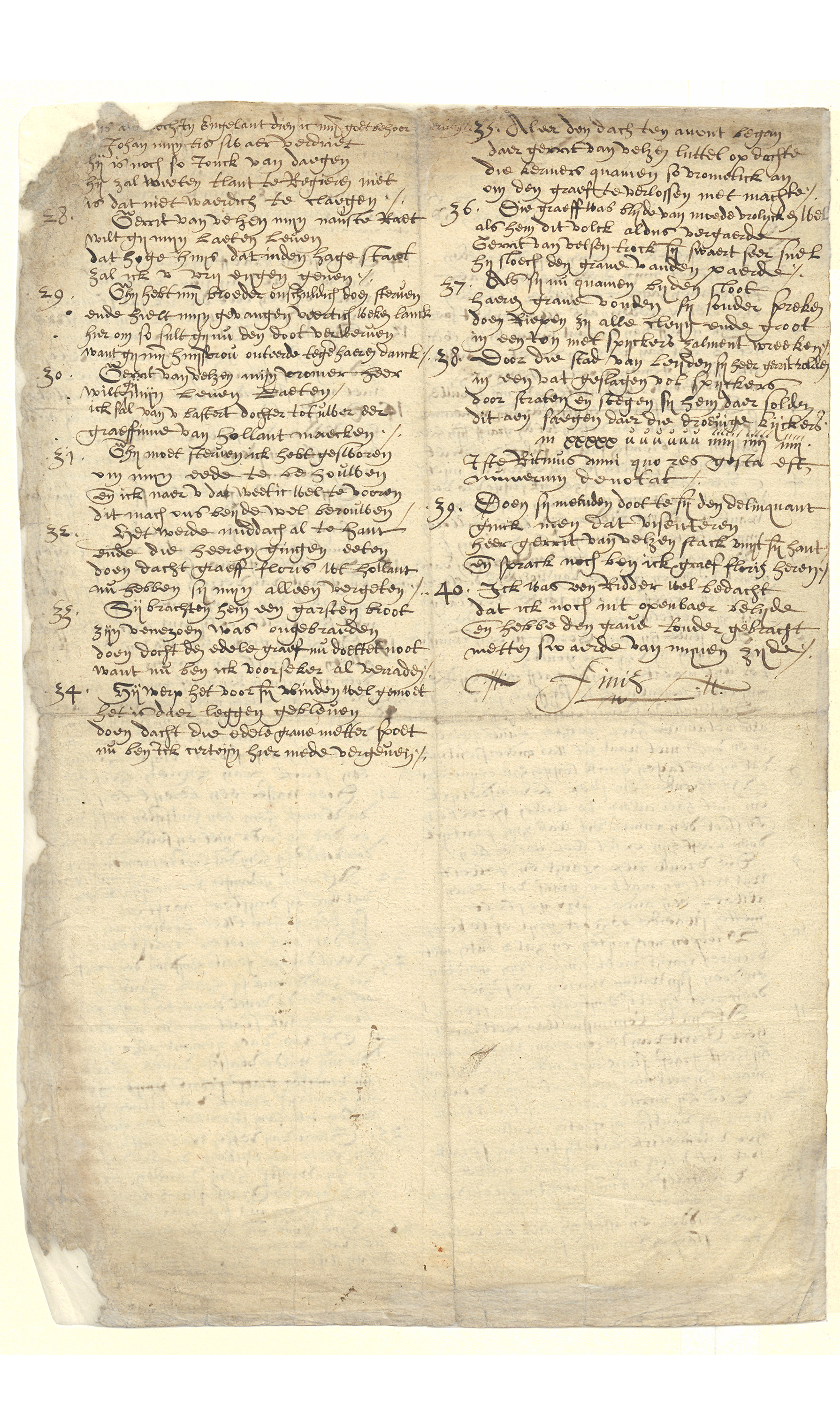
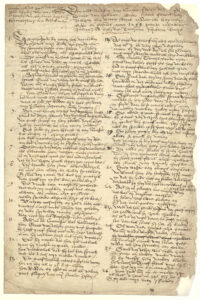
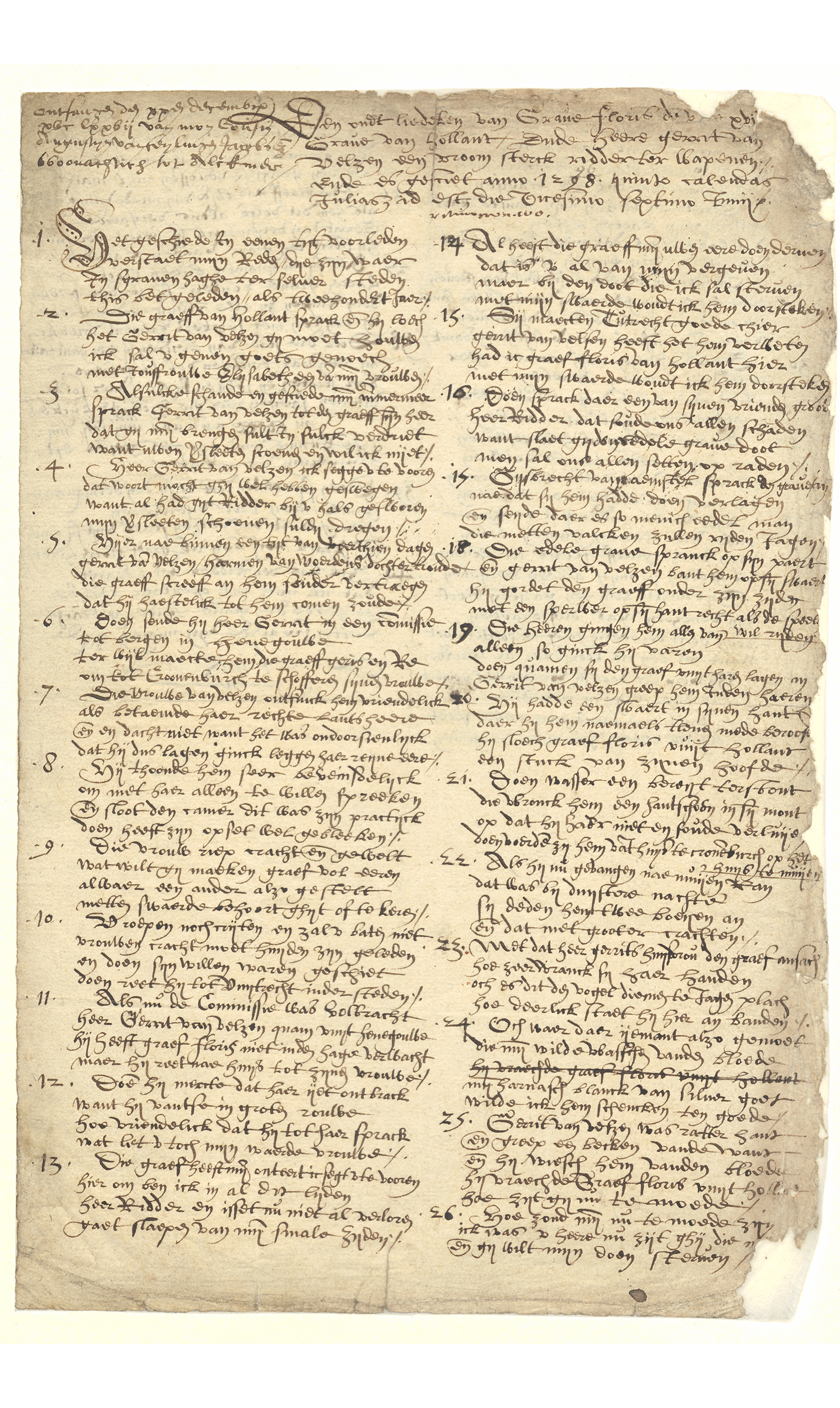
A search via the Civil Affairs Department of the Leiden City Hall and the Central Bureau for Genealogy eventually led to the then-current owner of the manuscript, who generously lent me the sheet more than once, including for an exhibition in the Leiden University Library in 2002-2003. When I spoke to the owner in 2024, the idea of donating the song sheet to the Maatschappij der Nederlandse Letterkunde came up. The library of this association is managed by Leiden University Libraries. This would bring the sheet together with the earliest-known manuscript with the song, on which an incomplete version is recorded (Ltk. 194, fol. 15r). The anonymous donation took place shortly afterwards. The donated song sheet (Ltk. 2348) is not the earliest of the two, but it offers the complete text for the first time. With forty stanzas it is by far the longest variant currently known.
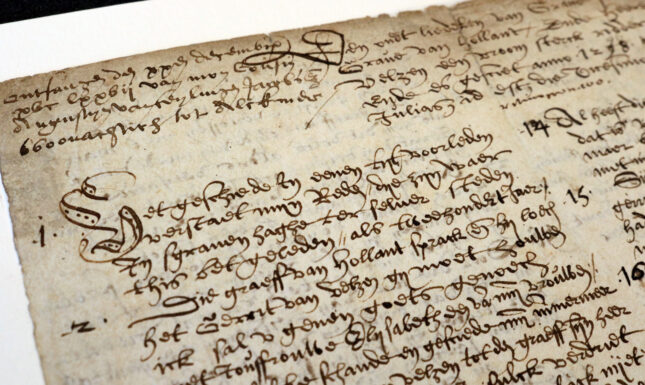
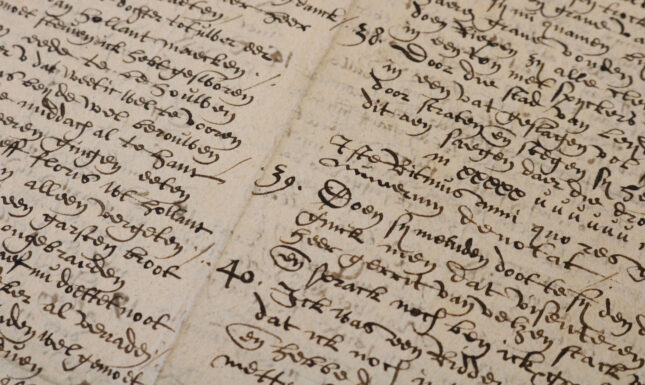
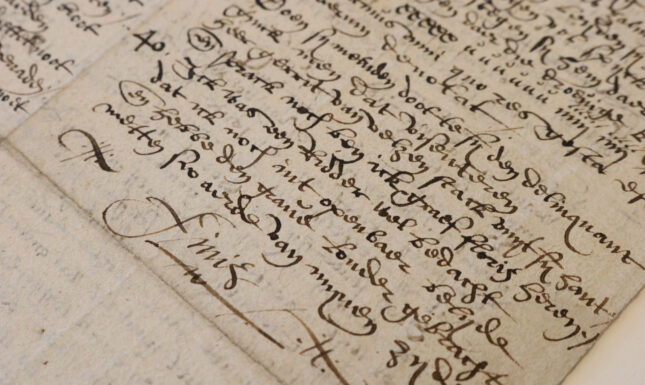
Fig. 6-8: Details of the history song on the murder of Count Floris V. Jochems manuscript; UBL, LTK 2348
This version came about around 1500, probably in Alkmaar. The song sheet that is now in Leiden was probably created in the same city around the middle of the sixteenth century. The first stanza explicitly states that the events took place more than two hundred years earlier. The first-known owner, Augustijn van Teylingen Jacbsz. (1549-1625), lived in Alkmaar and donated the sheet to a family member on 20 December 1577. Between 1719 and 1727, the Rotterdam scholar Cornelis van Alkemade had access to it and made a copy for his own use. After that, the sheet disappeared from view for more than two centuries, until it was offered for auction in Leiden in 1938.
The text on the song sheet makes it possible to plausibly connect the six known versions and adaptations of the song. The are now also available for further study in my recent publication Floris V ontvoerd en vermoord. Versies en bewerkingen van een middeleeuws historielied (Hilversum: Verloren, 2025).
About the author
Wim van Anrooij is an Emeritus Professor of Dutch Literature before Romanticism at the Leiden University Centre for the Arts in Society.