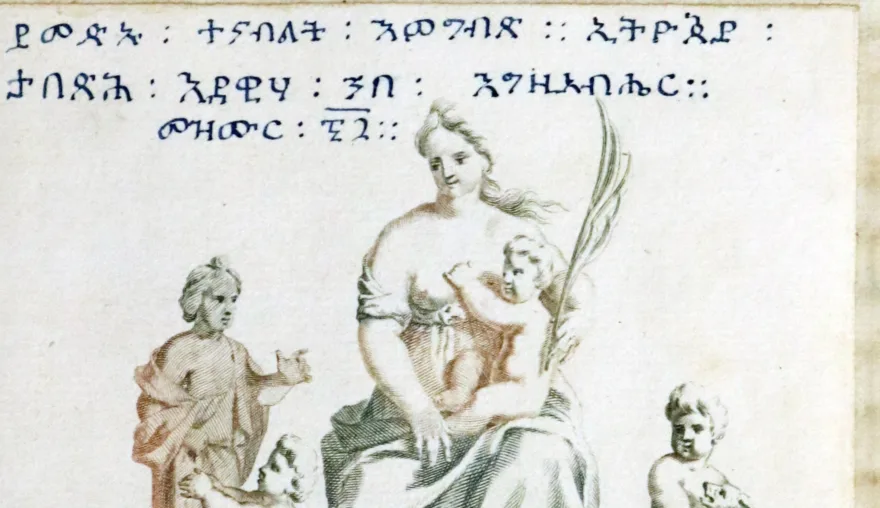
Coptic words in Pallas’ Universal dictionary

The Coptic collection in the Leiden University Libraries throws light on the way a Prussian scholar compiled a ‘universal dictionary’ for a Russian Empress in a time that comparative linguistics was still in its infancy.
The Russian empress Catherine the Great (1729-1796) was a remarkable woman in many respects: an autocratic ruler, but inspired by the French philosophes, she contributed actively and personally to literature, education and science in Russia. One fruit of her scientific interests was the Comparative dictionary of all languages and dialects in alphabetical order (Сравнительный словарь всѣхъ языковъ и нарѣчiй, по азбучному порядку расположенный), a dictionary containing words from 310 different languages from all over the globe, compiled in 1787 and 1789 by the Prussian scholar Peter Simon Pallas (1741-1811).
For some languages the data in the dictionary are the oldest or belong to the oldest known sources. The Dutch linguist Nicoline van der Sijs has coordinated the work of a group of volunteers who have made the 61,790 words of the Comparative dictionary digitally available in the Digital Pallas. Information on the material, like modern equivalents of the words listed, is still being added to the database.
Recently I have checked the Coptic words in Pallas against the materials in the Coptic dictionary of Walter Crum (1939). And in the Special Collections Reading Room of Leiden University Library I studied the sources that Pallas must have used for this part of his dictionary.
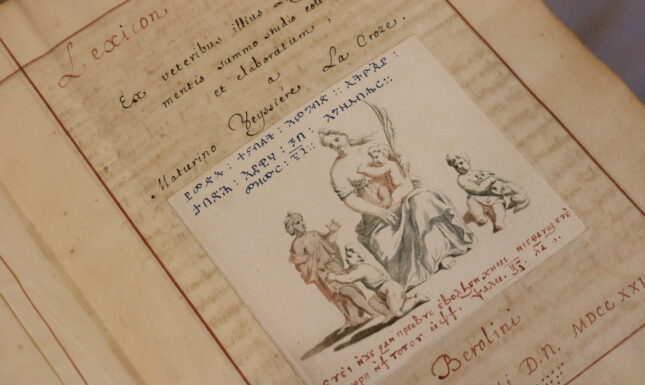
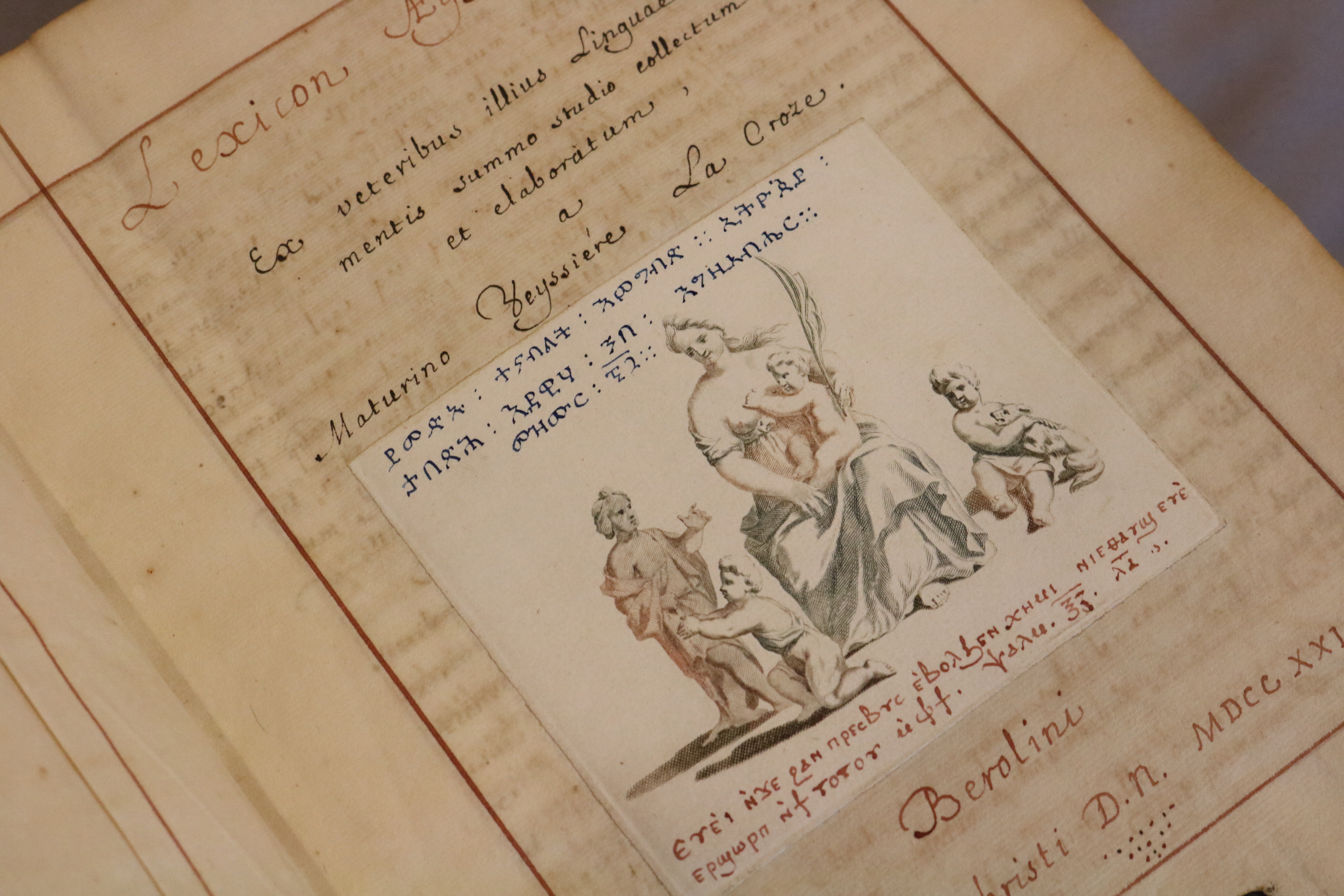
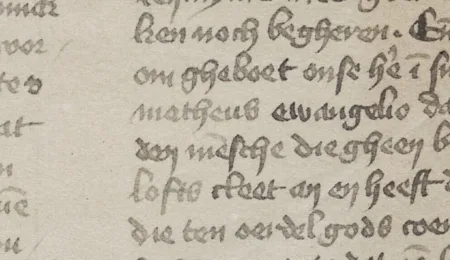
It turned out that the Russians had recent scientific books at their disposal: the Lexicon ægyptiaco-latinum ex veteribus illius linguæ monumentis summo studio collectum et elaboratum a Maturino Veyssiere la Croze edited by Christian Scholtz and Charles Godfrey Woide, published in Oxford in 1775. And from the way the Coptic words are transcribed in Cyrillic script, it is clear that they also knew the Grammatica Ægyptiaca utriusque dialecti from Scholtz and Woide from 1778. These two books are in the Leiden collection, but there is also something much more special: the handwritten Coptic Dictionary of Maturin Veyssière de la Croze from 1721 (shelfmark Or. 431 B.) on which Scholtz and Wojde based the book printed in Oxford.
De la Croze (1661-1739) had an adventurous life. As a child he was unhappy at school and he went to the Antilles at the age of 14, where he learned to speak English, Spanish and Portuguese and where he perfected his Latin with Erasmus’ Colloquia and the Gradus ad Parnassum. Back in France he entered the Benedictine order in 1677, where he was attached to the scholarly Congrégation de Saint Maur. He left the congregation in 1696, escaped to Basel by stagecoach and converted to Calvinism. In 1697 he became librarian in the Königliche Bibliothek zu Berlin (now Berlin State Library). Besides his Lexicon Aegyptiaco-Latinum (1721) Veyssière de la Croze compiled dictionaries for Armenian, Syriac and Slavonic, none of which was ever printed. His biographer Charles-Étienne Jordan came in possession of these manuscripts and after his death the Coptic and Armenian dictionaries were bought by Leiden University.
Woide, a polish theology student at Leiden, made copies of the Coptic dictionary for himself and for his teacher, Christian Scholtz (1697-1777). Their printed dictionary follows De la Croze very faithfully, and most of the Coptic words in Pallas can be traced back to this source.
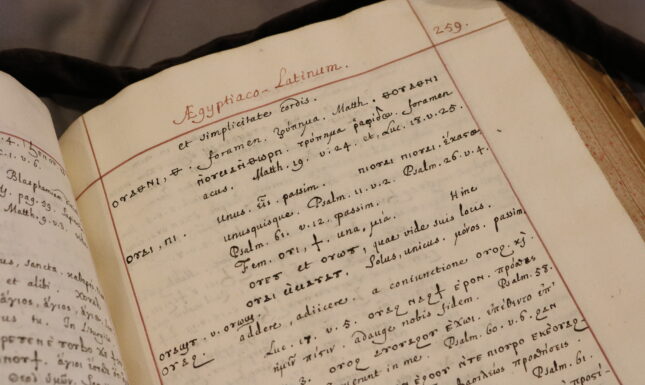
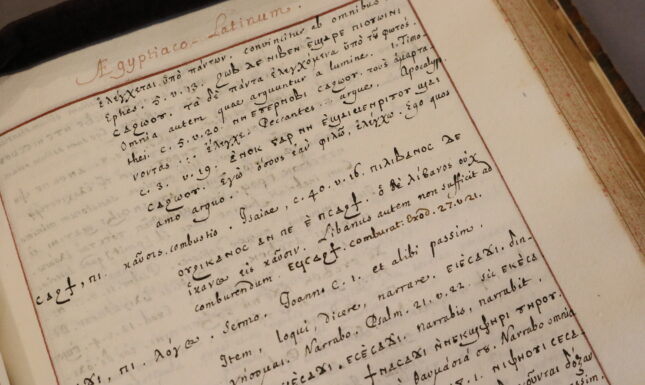
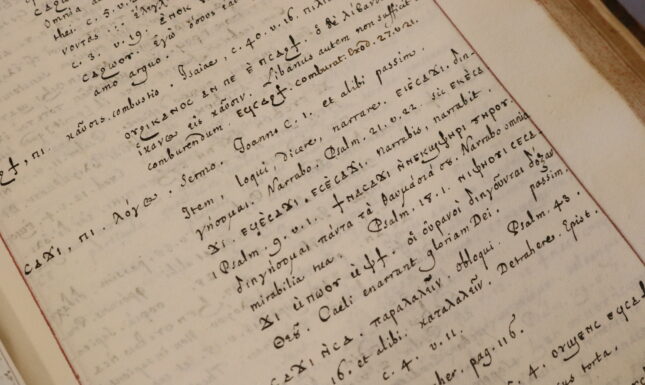
Some pages of the handwritten version of Veyssière’s Lexicon. Or. 431 B
Fortunately, some mysteries remain: a few Coptic words, words like альи́о̀тъ/alʹíòtʺ duck and ӷудаи/g̀udai how? are not yet accounted for. And there are some Greek loanwords, like кадосъ/kadosʺ whale, that are clear enough (Greek κῆτος/kêtos) but that I could not find in the Dictionary or the Grammar, and that Pallas must have found somewhere else.
About the author
Vincent Wintermans is Subject Librarian for Russian and Linguistics at Leiden University Libraries.
Further reading
- The Digital Pallas – Peter Simon Pallas, Comparative Dictionary of All Languages and Dialects (1790-1791)
- The Coptic material in Pallas