

Flying Squirrels and Delicious Garlic: Animals and Plants in an Illuminated Early-Modern Miscellany of Ancient Japanese Poetry
An early-modern scholar selected ancient Japanese poems that mentioned plants and animals and created an illustrated woodblock-printed anthology. The poems, which showcase the diversity of human engagement with the natural world in ancient Japan, come alive through the masterfully created images.
A poem about a flying squirrel is cute enough, but if there is an illustration, that’s even better.
by big strong men
on Mount Takamato
hunted down,
it came down here –
a flying squirrel, here it is!
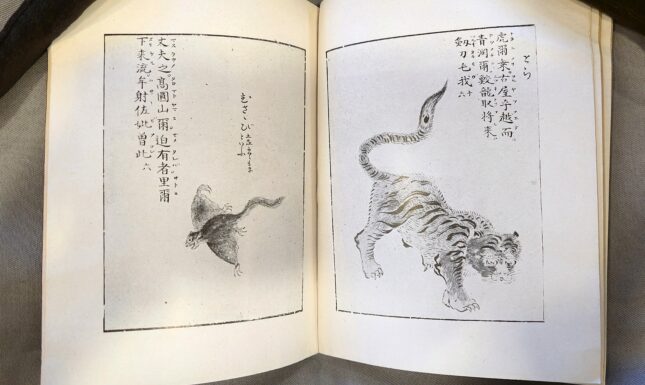
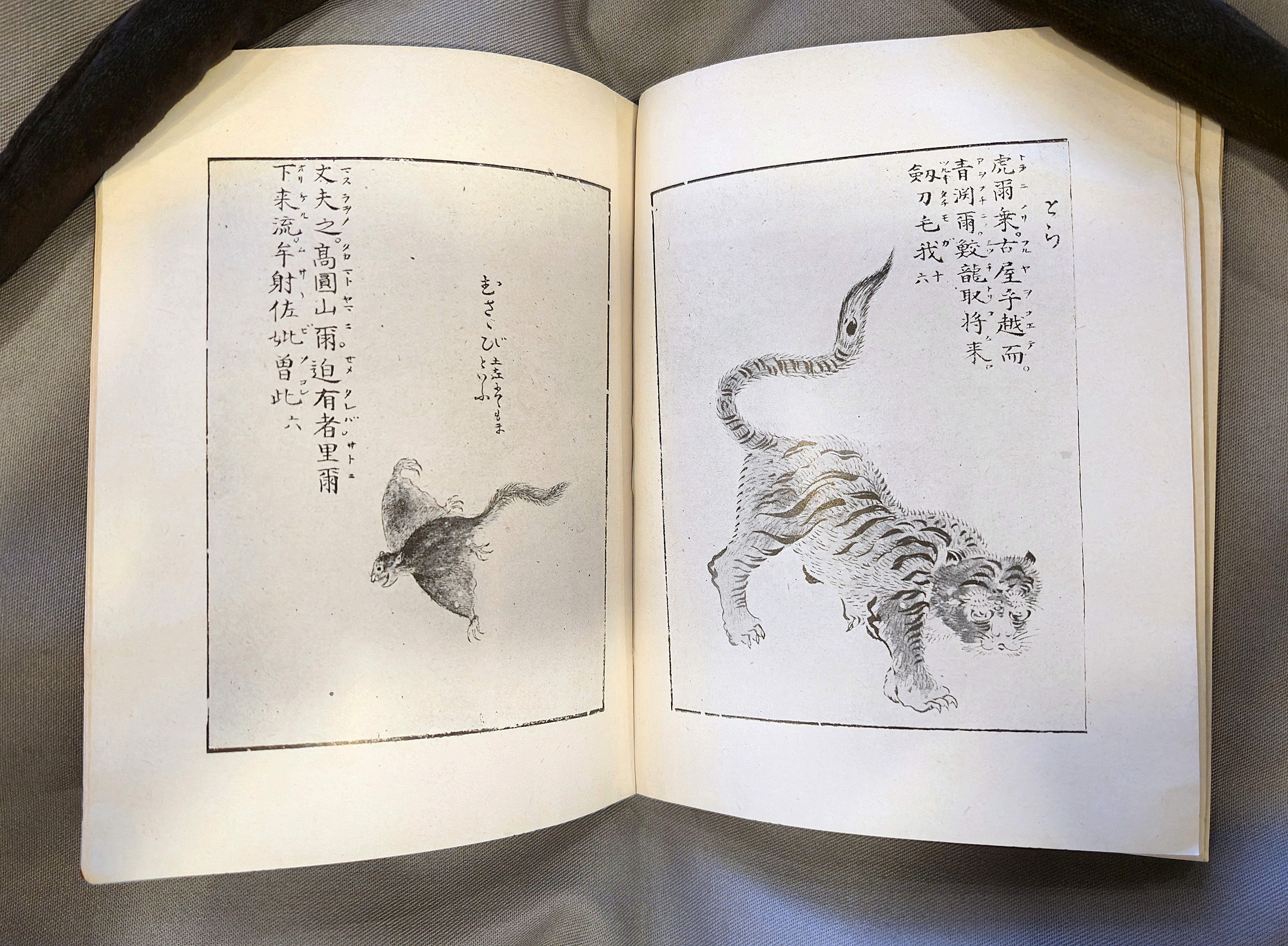
This poem is included in Man’yōshū (Collection of a Myriad Leaves), the oldest extant anthology of Japanese verse, compiled in the 8th century. Most of the poems in Man’yōshū are brief and adhere to the traditional form of five metric units of 5-7-5-7-7 syllables, like the one above.
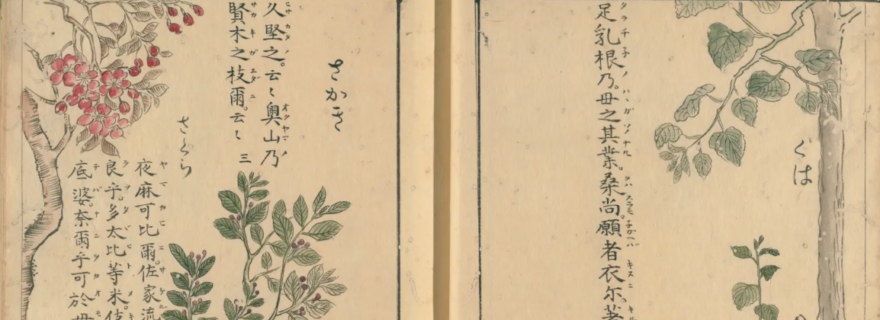
In the 19th century the Man’yōshū scholar Kamochi Masazumi selected a number of Man’yōshū poems featuring plants and animals and put them together in what he called Man’yōshū hinbutsu zue (Illuminated Man’yōshū Miscellany). Masazumi prepared the calligraphy and the illustrations himself; the book was printed with woodblocks. Leiden University Libraries hold a 20th-century re-printed edition of this work (JAPAN. 2640 A 27-28)
The headnote of the flying-squirrel poem tells the story of how it came about. In 739 AD, Emperor Shōmu was hunting in the Takamato area when a small beast appeared in the capital and was captured alive by the emperor’s men. The plan was to present the beast to the emperor along with a poem, written for the occasion. On the surface, the poem is deferential. The emperor’s hunt caused such a great stir, the poet implies, that beasts are fleeing the Takamato area, ending up where they should not normally be, in the capital city swarming with humans. Perhaps because the poet is a woman, Ōtomo no Sakanoue no Iratsume, she also adds another, somewhat tongue-in-cheek layer to the poem: take a look at this tiny animal, she says, whom the big strong men managed to scare away from its habitat (how impressive). Call it by its name: musasabi, the flying squirrel. As the poet cleverly balances reverence for the emperor with warm empathy toward the creature, so Masazumi seems to blend the accuracy of zoological depiction with a touch of whimsy. Look at this little musasabi go, ferocious and undefeated!
The poem’s postscript tells us that the small beast died before it could be presented to the emperor, and the poem, therefore, was not presented either. Luckily for us, this sad, amusing story survives in Man’yōshū.
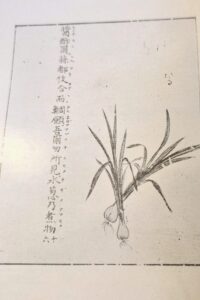
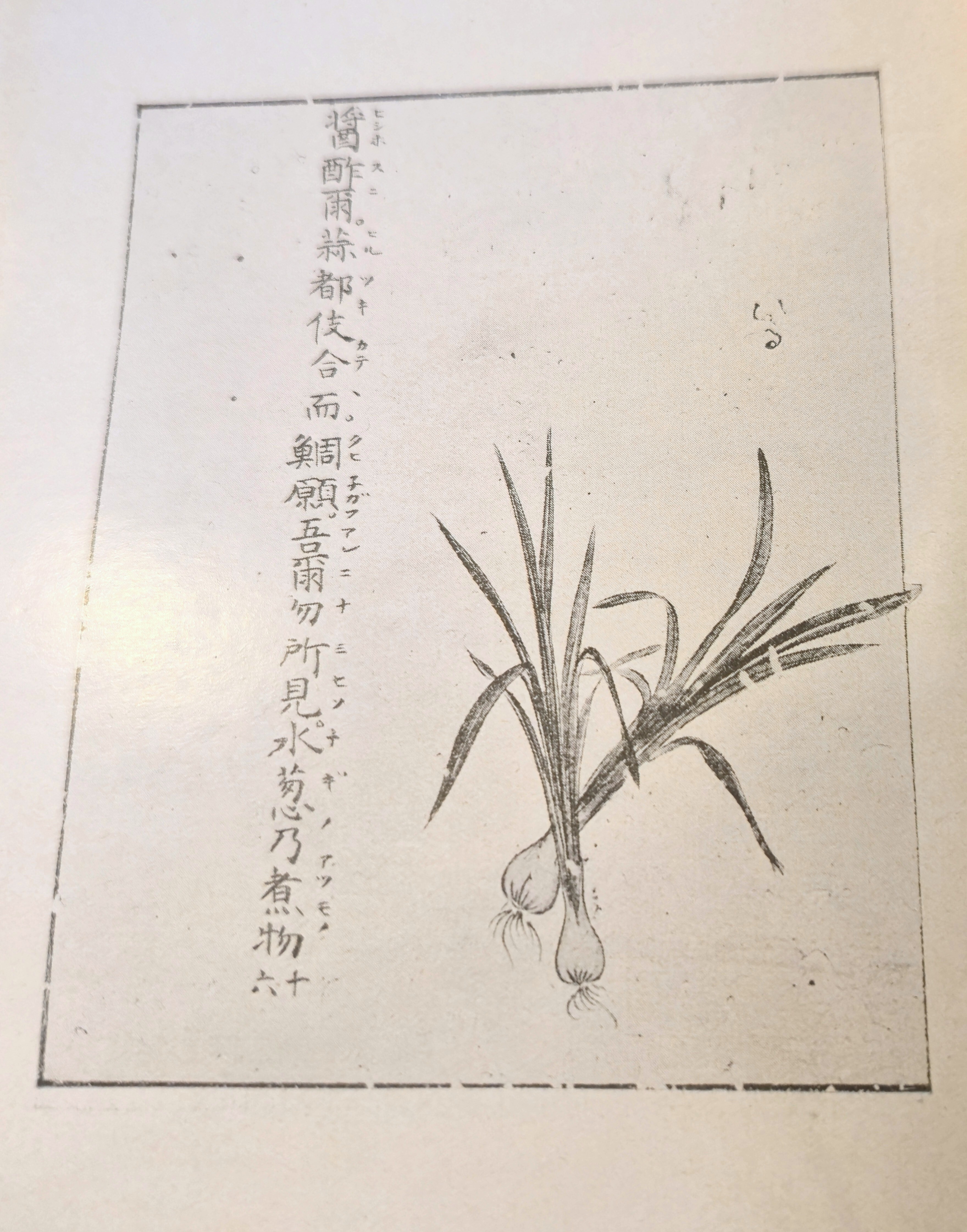
If the death of the flying squirrel has got you down, how about diverting yourself with this appetizing garlic?
to soy and vinegar
some garlic added…
I’m craving seabream.
get out of my sight,
boiled pondweed!
The poet plays with the idea that when bland, unsatisfying food is all that’s available, one dreams of a nice piece of well-seasoned, expensive fish. Masazumi, as though obliging the poem’s speaker, chooses to provide the illustration of garlic, not pondweed. The disagreeable boiled leaves are indeed out of our sight, and instead the daydream of the garlic materializes on the page.
Most of Man’yōshū poetry isn’t anywhere near this unserious, however. Consider, for instance, this touching love poem.
when spring arrives
the all’s-well grass blooms first –
if all is well
then we shall meet again!
don’t suffer so, my darling
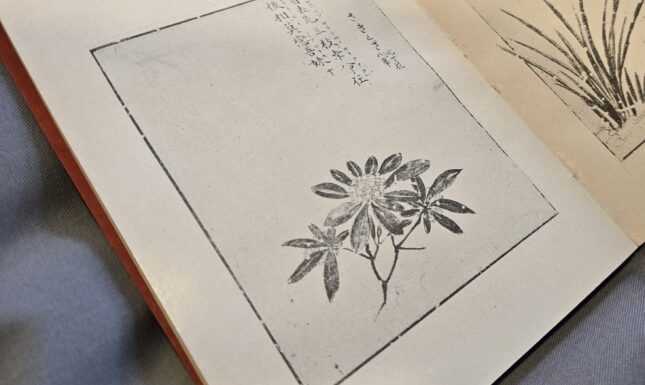
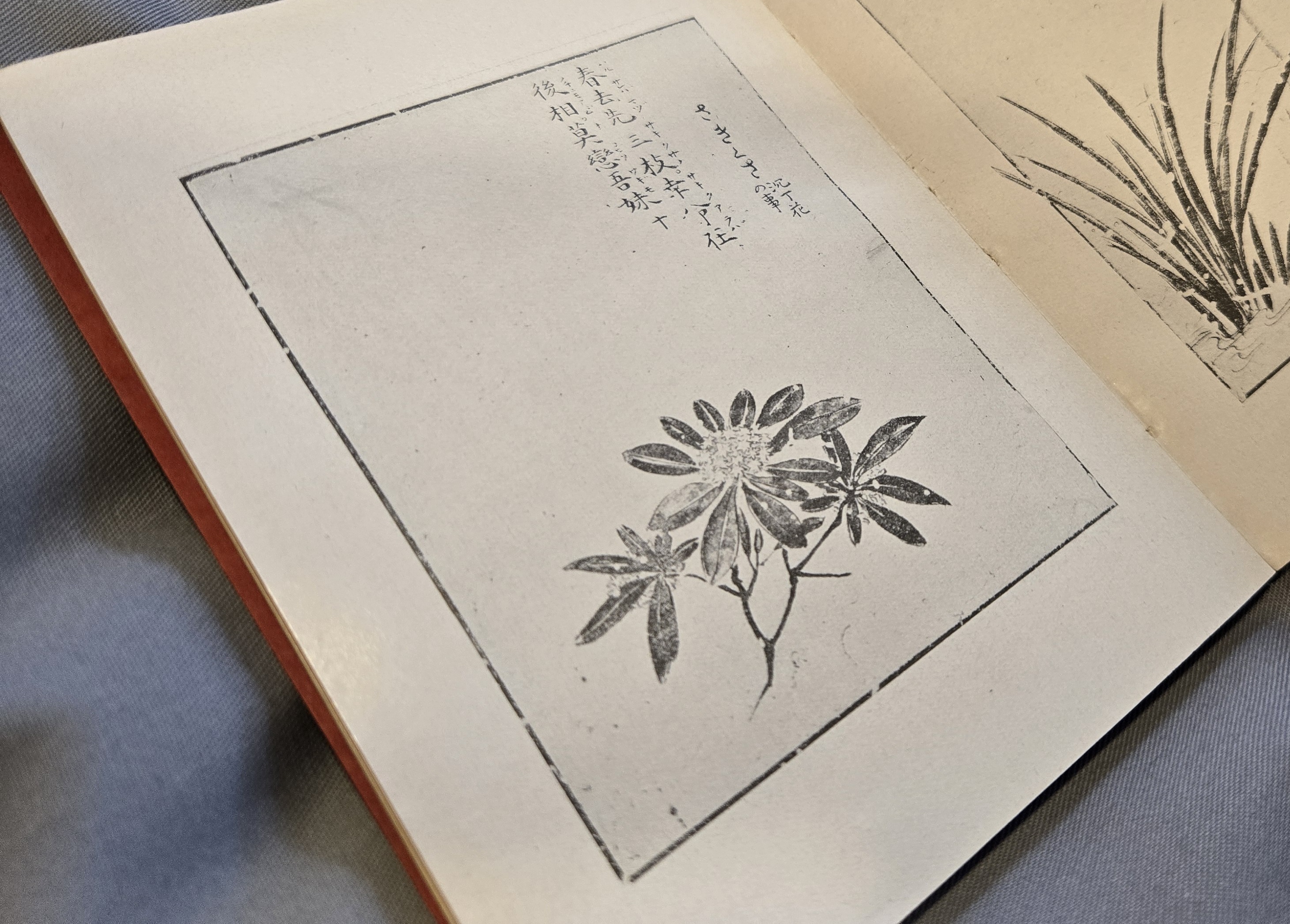
This poem utilizes the name of a plant, “all’s-well grass”, for wordplay—a common technique in Man’yōshū poems. At times we cannot be certain about the genus to which such Man’yōshū terms refer. One theory—to which Masazumi subscribes in his illustration—is that this particular plant might have been Daphne odora.
In the poem, a man tries to console his anxious darling, telling her that it’s all going to work out and they definitely will be able to see each other again.
It is easy to dismiss this kind of pun as somewhat superficial and overlook the grass and its auspicious name as a mere poetic flourish in a poem that is really about human feelings. Yet, the readers at the time presumably would have known what the plant in the poem looked like. We, in turn, have a helpful visual aid from Masazumi. The blossoming spring plant is a striking visual image, resolute in its materiality, its realness. It would be erroneous to think that the nonhuman part of the poem only serves to support a human-centric vision. The two parts of the poem exist in an equilibrium, as the lovers learn to be more hopeful by observing the tangible, colorful hopefulness of springtime.
About the author
Nina Farizova is a Japan Foundation - Nichibunken Fellow at the International Research Center for Japanese Studies (Nichibunken) in Kyoto, Japan, where she is at work on a book on the diversity of subjective experience in ancient Japanese poetry. She received a PhD in East Asian Languages and Literatures from Yale University in 2023. All translations from Man’yōshū in this blogpost are hers.