Printing for a Manuscript Culture: Early 20th-Century Books from Yemen’s State Press

Leiden University Libraries hold a rare collection of the earliest books produced with printing technology in Yemen during the first half of the twentieth century. Their material features reveal how these works were made—and how reading practices transitioned from manuscript to print culture.
In 1877, the Ottomans introduced the first printing equipment to Yemen, using it primarily to produce administrative forms and the newspaper Ṣanʿāʾ. When they withdrew from the country in 1918, they left the printing equipment behind. It was then taken over by the newly reestablished Zaydi Imamate under Yaḥyā Ḥamīd al-Dīn (d. 1948), who sought to transform Yemen into a modern nation-state. As part of its cultural and religious reforms, the Yemeni Ministry of Education began publishing the official newspaper al-Īmān and initiated a small-scale programme of book printing.
A collection found nowhere else
Today, physical copies of the books published until the imamate was overthrown in the 1962 revolution are exceedingly rare. With one notable exception: based on my survey of accessible online catalogues—excluding Yemeni collections which remain inaccessible due to security concerns and lack of remote searchability—the Leiden University Libraries appear to be the sole institution worldwide that holds a substantial number of these titles, with a total of 21 copies. Several of these copies had been brought to Leiden by the Dutch chargé d'affaires in Jedda Cornelis Adriaanse, who visited Yemen and its capital Sanaa several times in the 1930s. In addition to printed books, Adriaanse also contributed to the creation of the Leiden University Libraries' collection of Yemeni manuscripts.
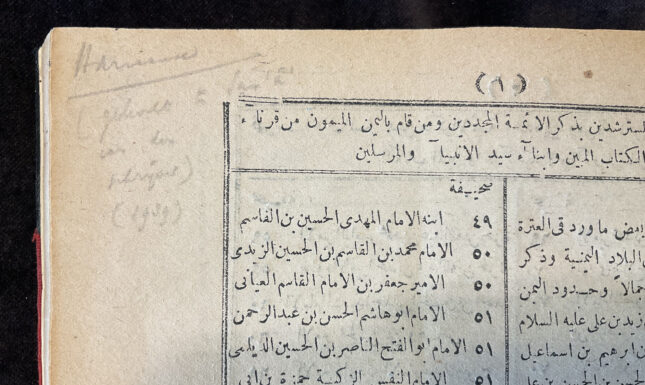
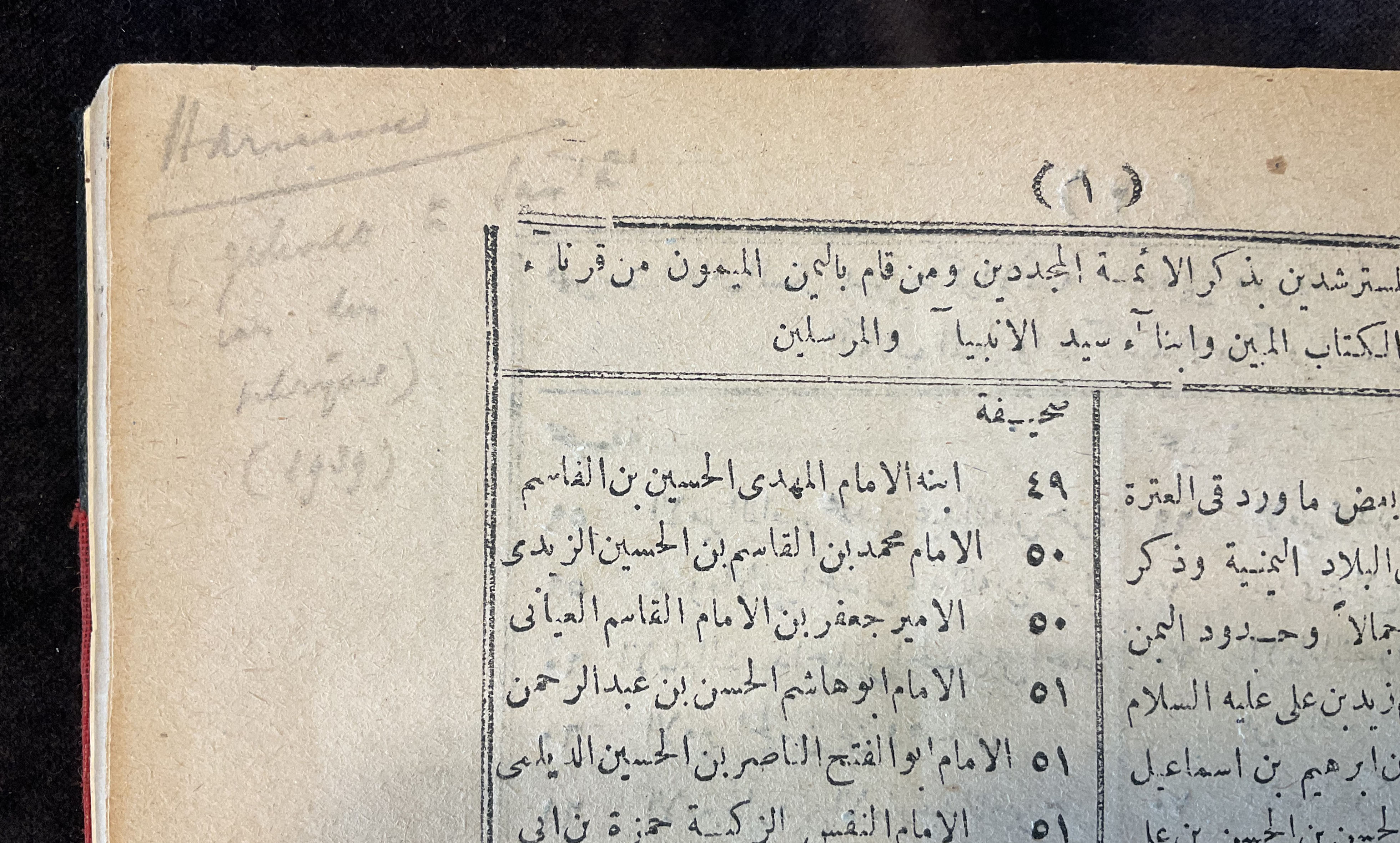
If scholars of book history want to understand the transition from manuscript to print culture, the actual content of the newly emerging print products does not necessarily play a primary role for them. Instead, we may focus our attention on books as objects as well as on so-called paratexts, that is, all kinds of written notes that provide information about the production and use of the newly developing print culture. In this way, we can obtain data about how books were produced, what kind of market existed for them, and what the reading habits of people were.
Rudimentary printing technology
The pressmen of the Yemeni state printing house, located within the Imam’s palace, inherited equipment that was past its prime. In several books, including some of the first issued by the press, the responsible officers inserted brief notes to readers, explaining that the ageing machines could produce only sub-optimal print quality.
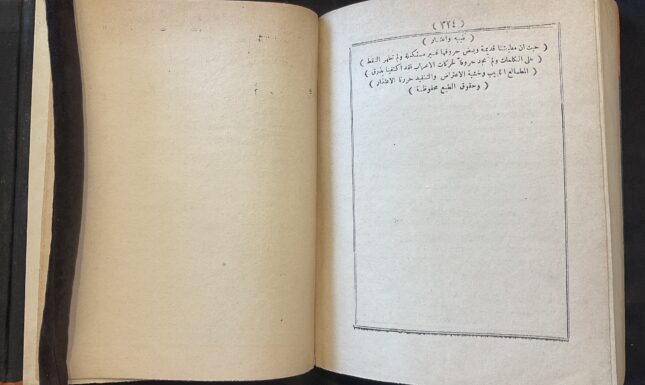
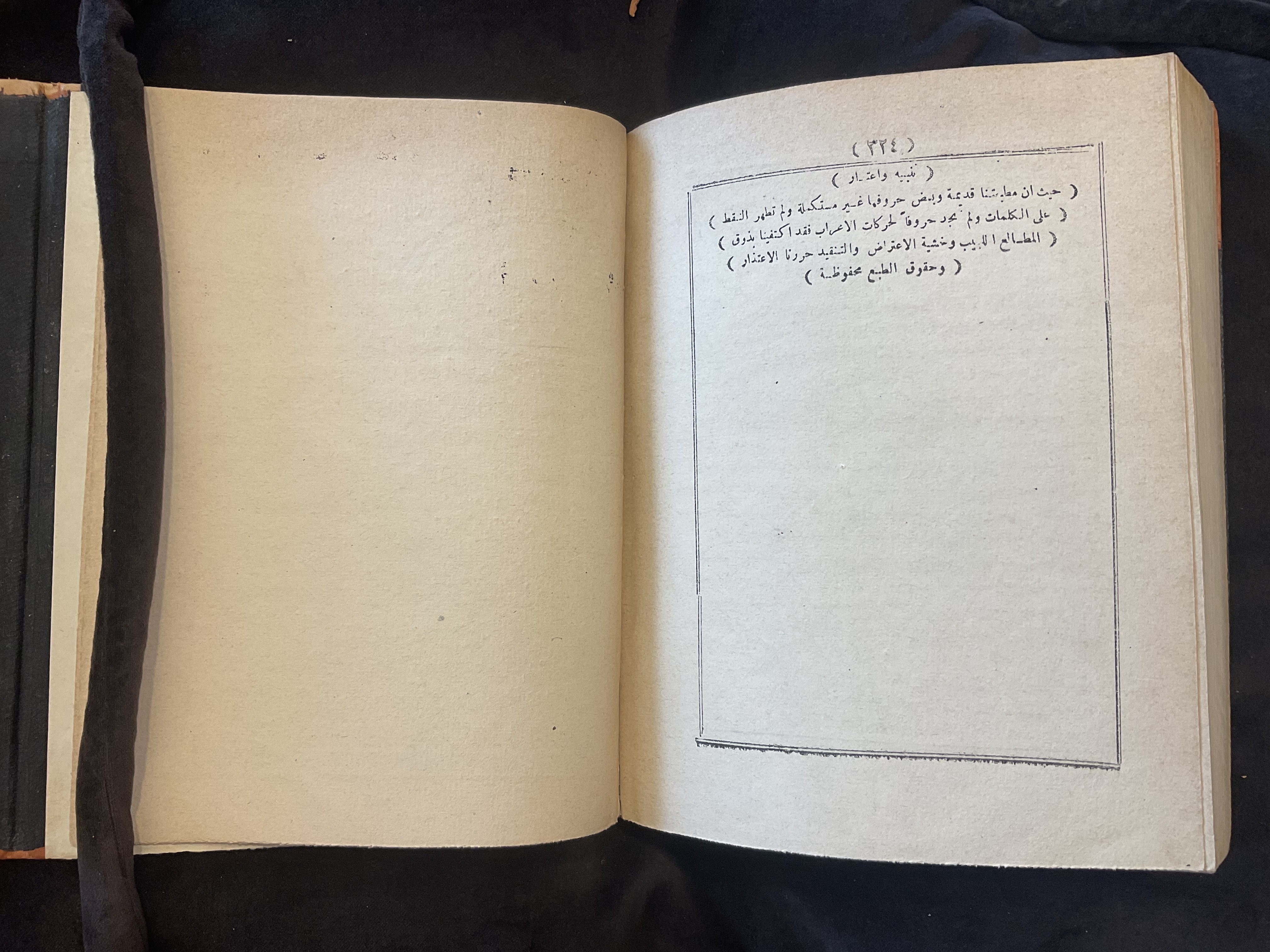
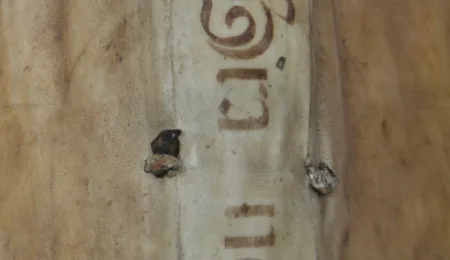
Indeed, not a single surviving volume from the press shows properly aligned text blocks, and even copies of the same edition differ from one another in the degree of their skewed orientation. The frames that held the types together during printing left noticeable ink stains. The pressmen appear to have struggled as well with achieving an even transfer of ink to the paper, resulting either in under-inking—with faded or incomplete characters—or in over-inking, which produced saturation or smearing.
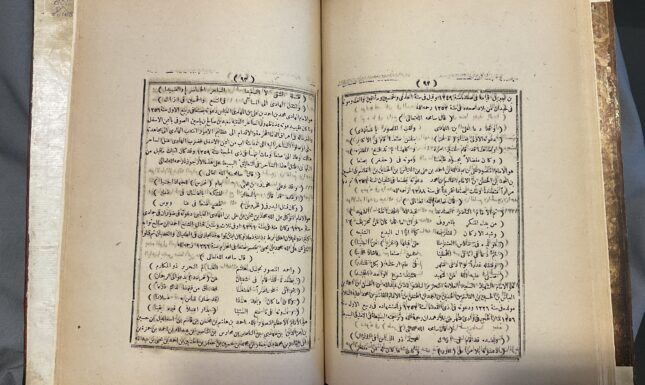
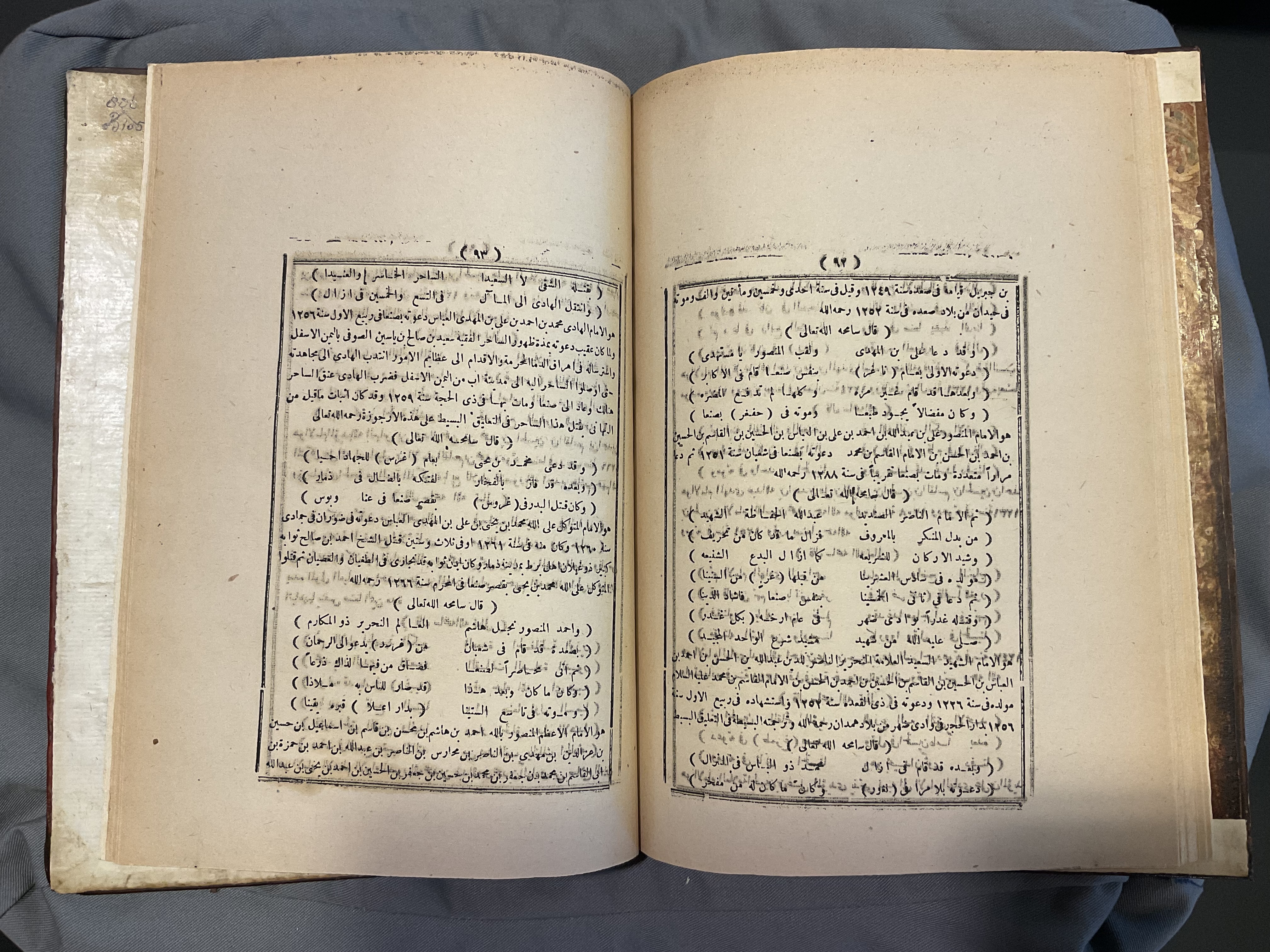
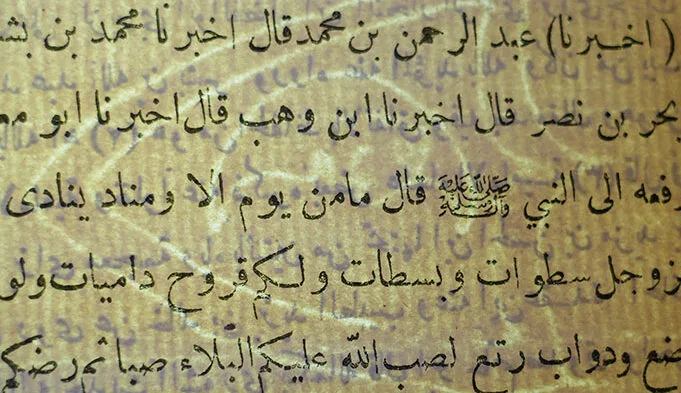
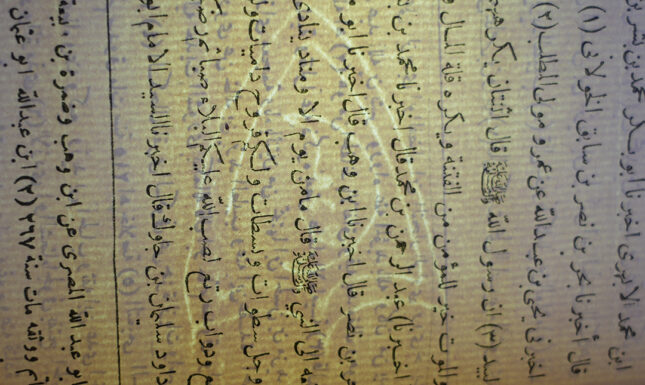
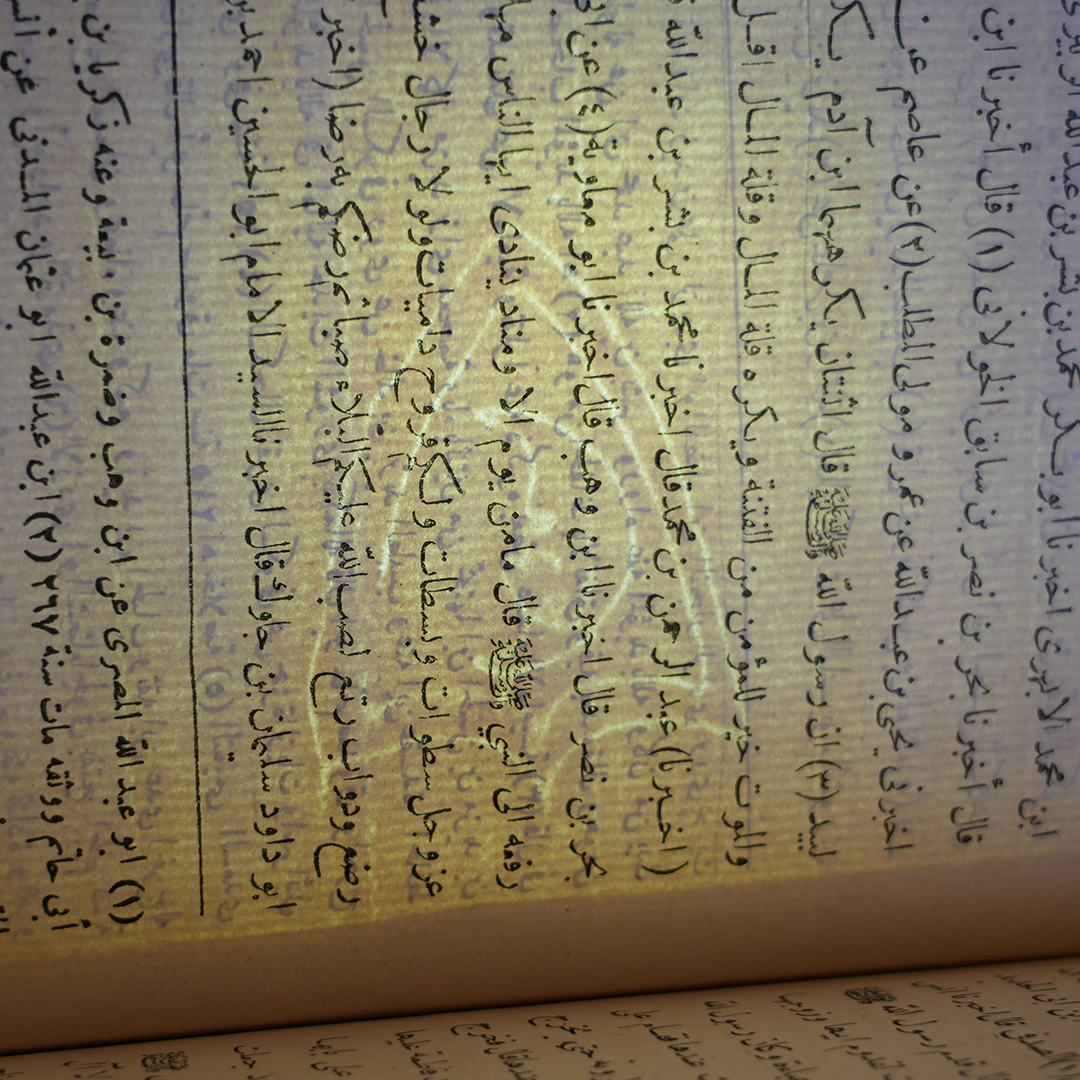
Depending on the absorbency of the various papers used, as well as the size of the type, print quality could vary considerably. As the pressmen gained experience, they gradually developed material standards that enabled them to obtain, within the limits of their equipment, the best results possible. A medium font size for the main text proved most successful when printed on laid paper from what was likely an Istanbul manufactory, identifiable by its watermark bearing the name of the manufacturer and a crescent featuring a human profile within a shield.
Manuscript conventions in prints
Aesthetically, those responsible for publications at the Imamic palace embraced a markedly different vision from that of their predecessors at Sanaa’s Ottoman Provincial Press. A 1909 Turkish translation of a slim volume containing the so-called Covenant of ʿAlī b. Abī Ṭālib reflects the defining features of modern print conventions (such as paragraph breaks, or punctuation marks), and contrasts with many features of the books produced under the auspices of the Yemeni Ministry of Education.
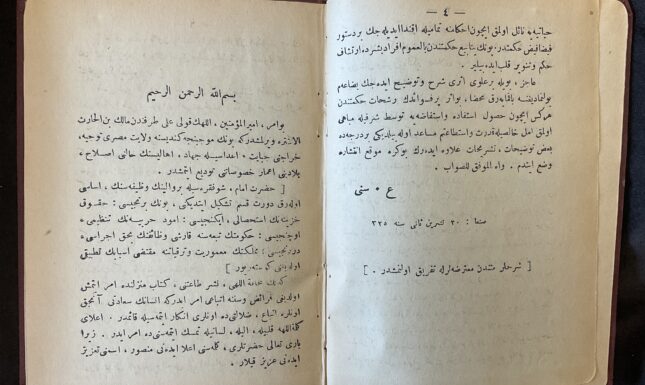
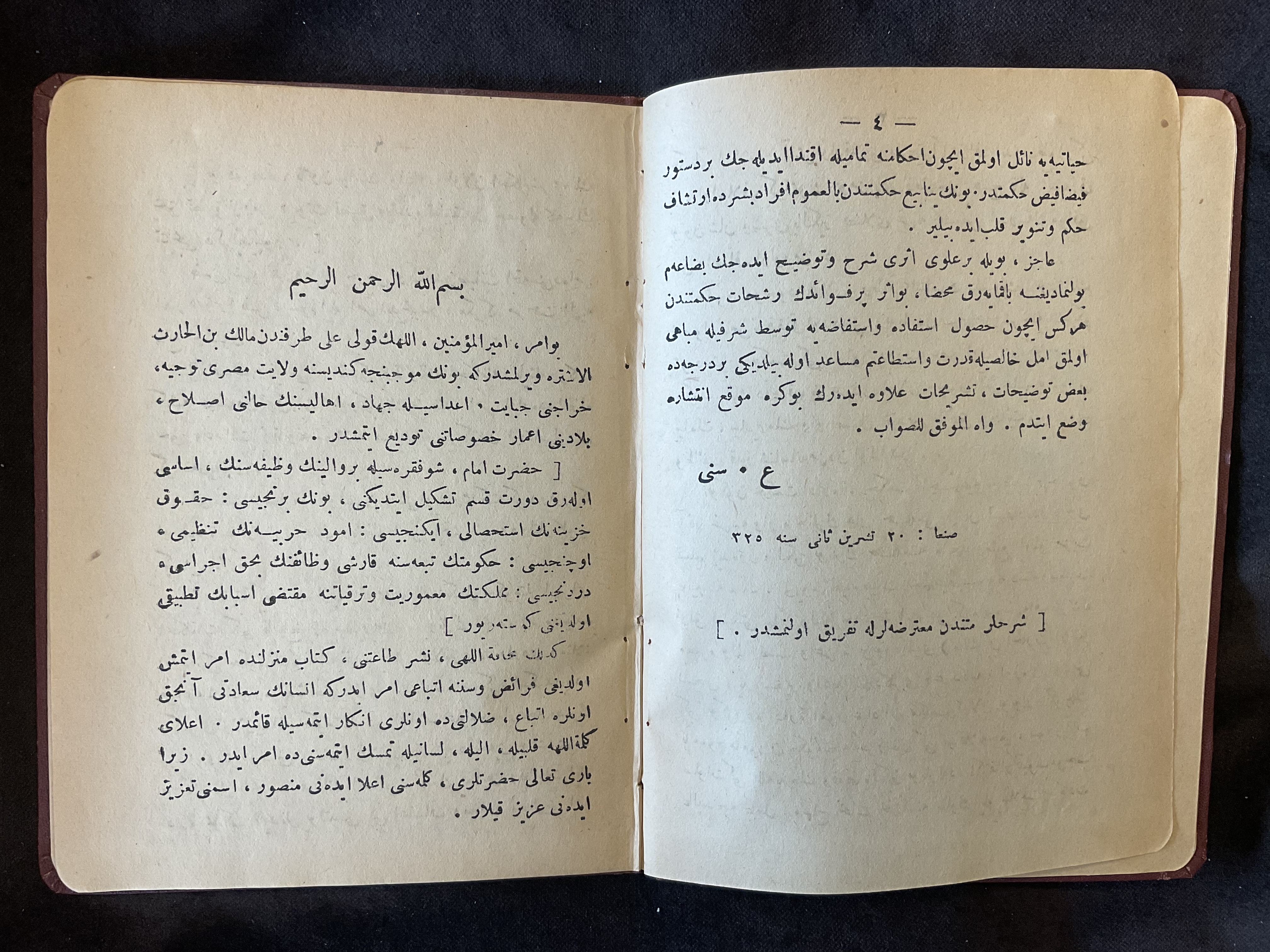
Unlike the Ottoman pressmen, the Yemenis clearly produced printed books for an audience that was used to reading manuscripts. Leafing through the prints, what immediately stands out are the rectangular blocks of text, which are only rarely—and in some books not at all—broken up by paragraphs. The very limited use of punctuation, such as periods, commas, and semicolons, also shows that reading practices were still shaped by the conventions of manuscript layout, where only minimal textual dividers were used. At times, the printers added asterisks as dividers, a practice that has completely disappeared from modern printing conventions, but this seems to have better matched the expectations and reading habits of their intended audience than the punctuation marks we use today.
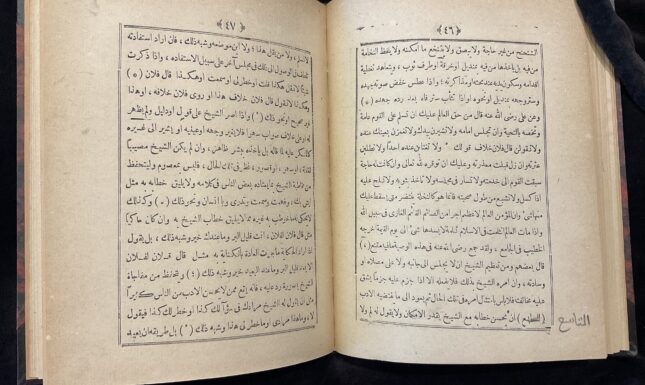
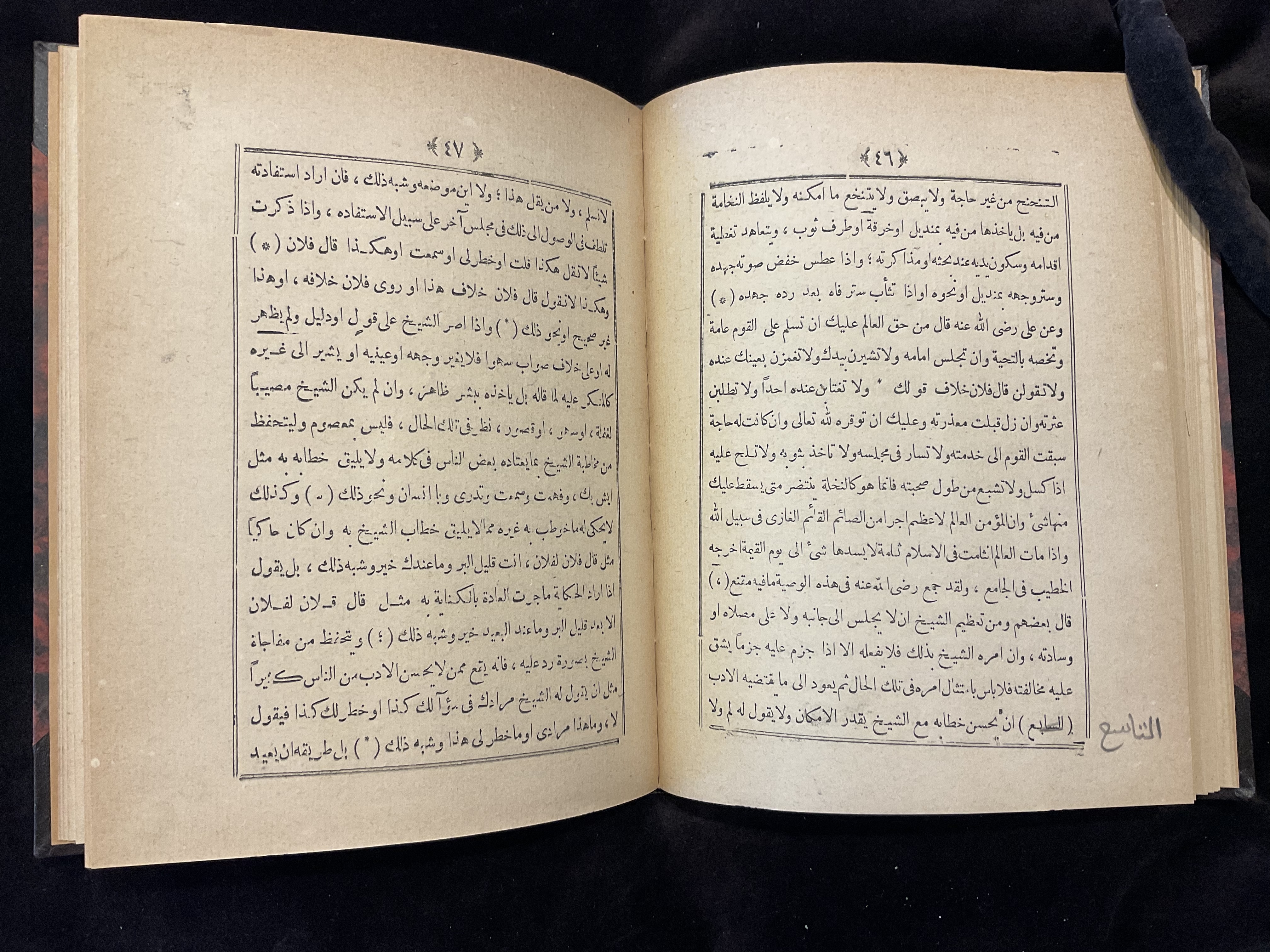
Another feature that derives from the Arabic manuscript tradition and appears frequently in these Yemeni books is the use of colophons. In manuscripts, colophons are the place where the copyists’ own voices emerge, offering more or less detailed information about how a manuscript copy was produced. Yemeni printers carried this practice—so characteristic of the Arabic manuscript tradition—on into their printed books. In their colophons, they recorded the date and place of completion, the motivation and purpose of printing the book, the names of scholars who supervised the correction of texts based on earlier manuscript transmission (similar, though not identical, to what we would call editors), and occasionally the name of the pressman.
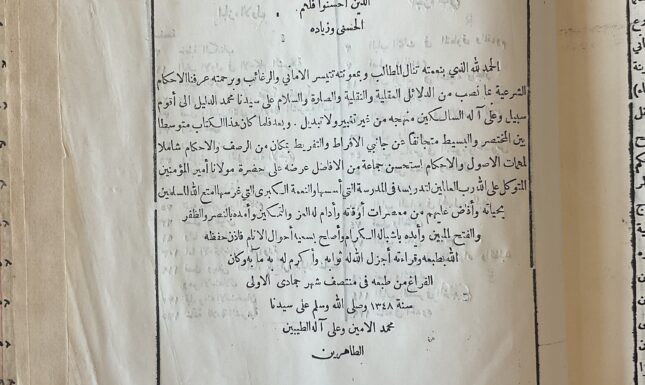
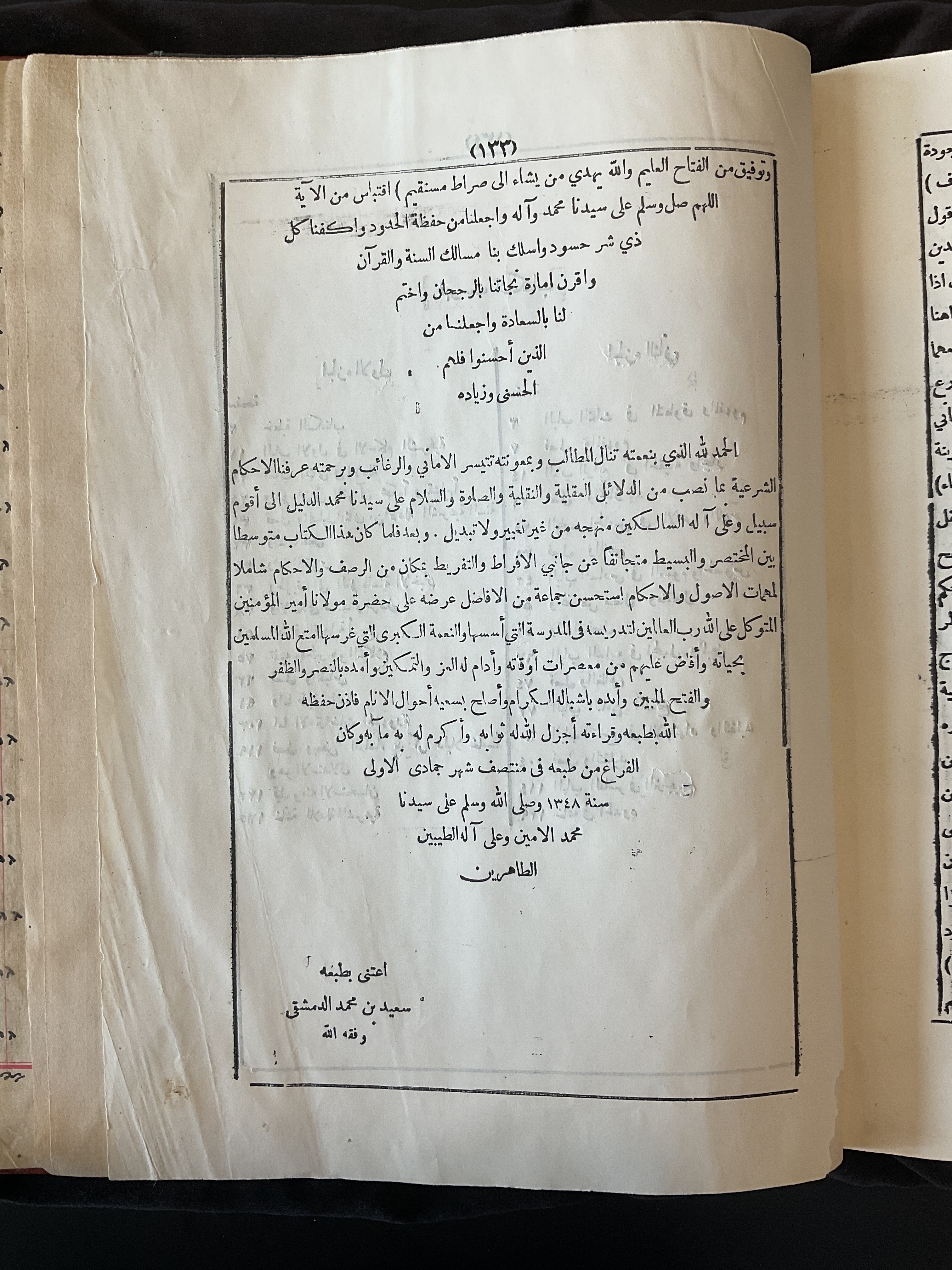
Given that paper was the most expensive component of book production, it is striking to find that some books feature very generous margins—that is, they make rather inefficient use of the available page space, which would otherwise help reduce printing costs. What might explain this practice? Once again, looking at how manuscript layouts responded to the needs of their users can help us understand this choice. In the Islamic manuscript tradition, layouts with wide margins and ample interlinear space developed to accommodate extensive annotations and commentaries on the main text. From the sixteenth century onward in particular, teaching and scholarship were increasingly conducted through commentaries and glosses on earlier commentaries, forming multilayered clusters of knowledge. The generous margins in printed books may therefore represent a direct continuation of this tradition. Indeed, some prints preserved in the Leiden collection contain handwritten notes added by readers who studied them.
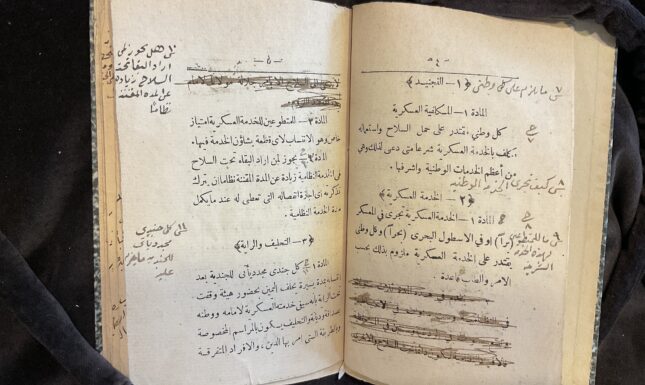
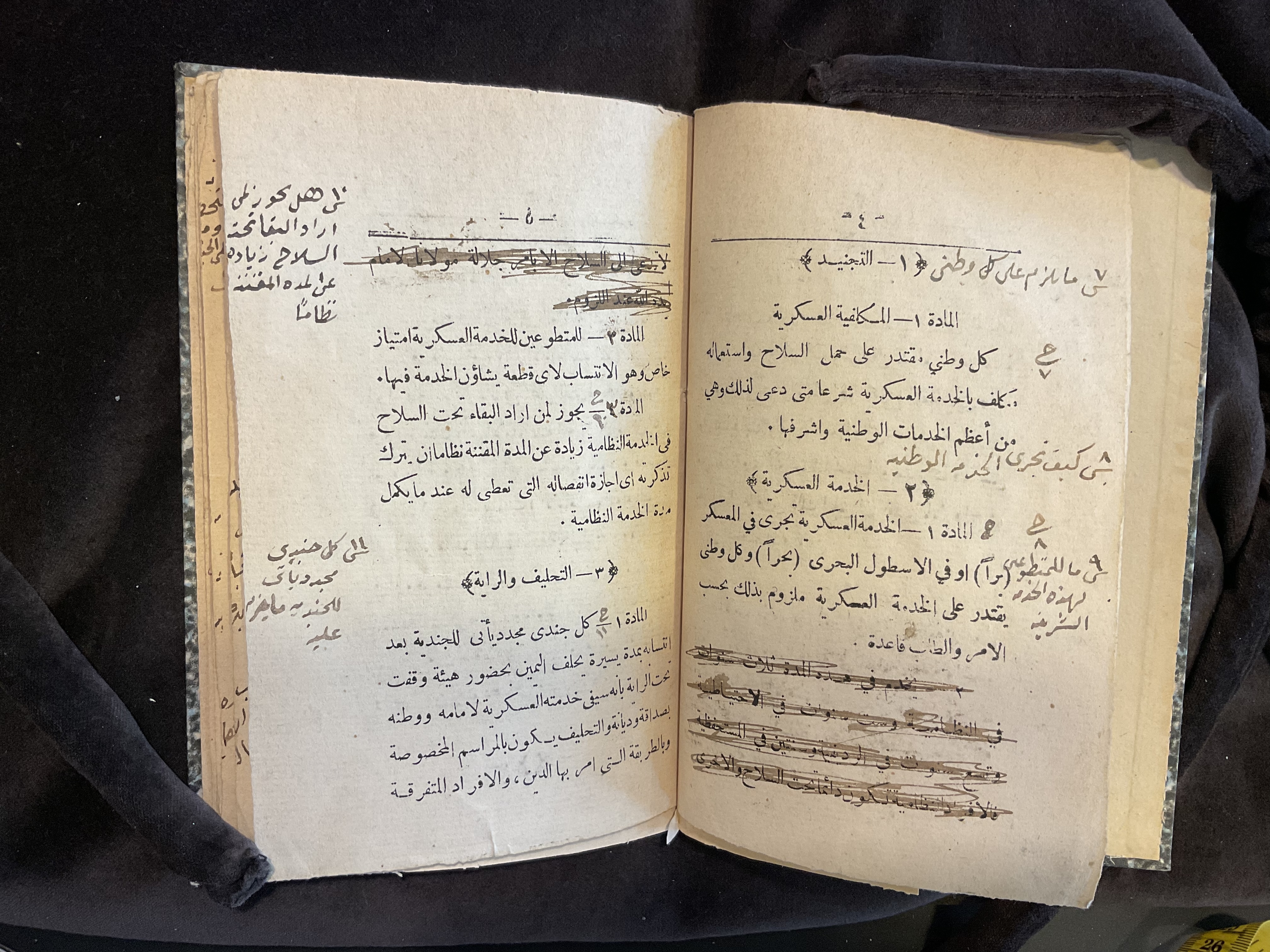
However, it is important to keep in mind that such marginal notes can only be found in books that entered the Leiden libraries already in used condition. Once in Europe, these books were exposed to different reading habits, and therefore they offer only limited evidence for how they were used in Yemen.
About the author
Jan Thiele is Senior Researcher at the Institute of Languages and Cultures of the Mediterranean and the Near East of the Spanish National Research Council (CSIC), Madrid. This post is based on research conducted as a Juynboll Fellow at Leiden University Libraries in October 2025.